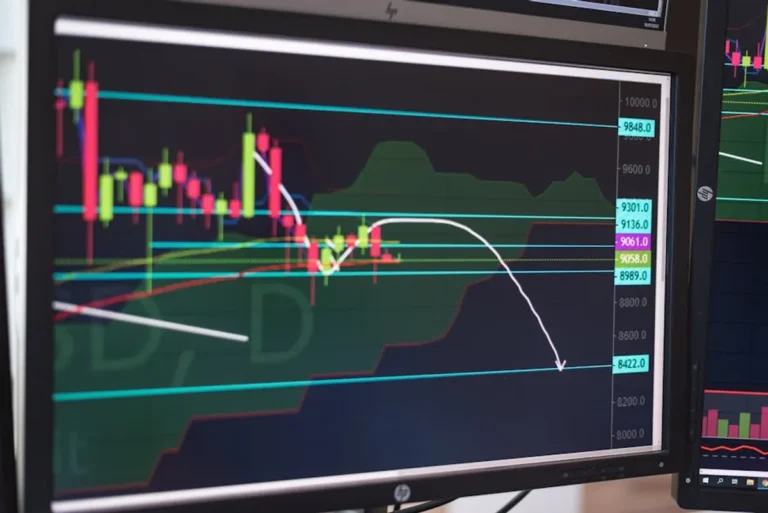
Monitoring a keyword's position is a vanity exercise if you ignore the standard deviation of its movement. A stable rank of 4 is fundamentally different from a rank of 4 that swings between 2 and 18 every seventy-two hours. High-frequency SERP turbulence often signals an impending algorithmic shift, a mismatch in search intent, or aggressive competitor testing. To protect organic revenue, you must move beyond static rank tracking and begin measuring the specific volatility of your own keyword clusters.
Establishing a Localized Volatility Baseline
Global volatility sensors provide a macro view of Google's mood, but they rarely reflect the specific stability of a niche vertical like "enterprise SaaS" or "local legal services." Your first step is to establish a 30-day rolling average of position changes across your core keyword sets. This baseline allows you to distinguish between "normal" daily flux and genuine ranking decay.
Best for: Identifying whether a drop is a site-specific issue or a broader niche reorganization.
To calculate this, track the daily delta (the difference between today’s rank and yesterday’s) for every keyword in a cluster. If your average daily delta is 1.2 positions, a sudden jump to a delta of 5.5 across 40% of your keywords indicates a significant volatility event. Without this baseline, you risk overreacting to minor "Google dance" movements that would have corrected themselves within 48 hours. This calculation helps distinguish between normal daily fluctuations and true SERP volatility.
Isolating Intent-Based Turbulence
Volatility is rarely uniform across different search intents. Informational keywords—those triggered by "how-to" or "what is" queries—typically exhibit higher churn as Google tests different content formats and AI-generated summaries. Transactional keywords tend to be more rigid, as the commercial intent is stable. If you see high volatility in your transactional bucket, it often suggests a change in how Google views the "helpfulness" of your landing pages compared to competitors with better conversion signals or faster load times. Understanding this distinction helps you effectively track Google ranking swings and avoid unnecessary alarm.
Quantifying SERP Feature Churn
Rankings are no longer just about the ten blue links. A stable position 3 can lose 50% of its click-through rate if Google suddenly injects a massive "People Also Ask" block or an AI Overview above the fold. Measuring volatility requires tracking the presence and displacement of these features.
- Feature Frequency: The percentage of days a specific feature (e.g., Local Pack, Video Carousel) appears for a keyword.
- Pixel Depth: The physical distance from the top of the viewport to your result, measured in pixels. This accounts for volatility caused by expanding and contracting SERP features.
- Snippet Ownership Turnover: How often the Featured Snippet changes hands between you and your top three competitors.
High turnover in the Featured Snippet often indicates that Google is unsatisfied with the current "best" answer. This is a signal to update your content with more concise, data-backed definitions or to improve your structured data implementation to better align with the query's requirements.
Warning: Do not adjust your on-page SEO based on a 24-hour volatility spike. Google frequently runs "split tests" where they temporarily demote a high-ranking page to gauge user signals. If you change your H1s or metadata during this window, you risk "breaking" the page just as Google was prepared to restore its original position.
Measuring Competitor Displacement Velocity
Volatility isn't just about your site moving; it’s about who is replacing you. By measuring the velocity at which a specific competitor climbs while you fall, you can identify if the volatility is driven by a specific content strategy or a technical advantage. If five different competitors all move up by 2 positions while you drop by 10, the problem is likely your site's technical health or content relevance. If one specific competitor leaps from page 3 to page 1, they have likely hit a specific algorithmic "sweet spot" that you need to reverse-engineer.
Tracking Mobile vs. Desktop Variance
Mobile SERPs are inherently more volatile due to location-based triggers and limited screen real estate. Measuring the gap between mobile and desktop volatility is a critical diagnostic step. If your mobile rankings are swinging wildly while desktop remains stable, the volatility is likely tied to Core Web Vitals (specifically CLS or LCP) or a mismatch in the mobile user experience. High mobile volatility in the absence of desktop movement almost always points to a technical performance bottleneck.
Advanced Metrics: Standard Deviation of Rank
For high-volume keywords, calculating the standard deviation over a 14-day period provides a "stability score." A low standard deviation (e.g., < 0.5) means the keyword is "locked in." A high standard deviation (e.g., > 3.0) means the keyword is in a state of flux.
Practical Application: Direct your link-building and content-refresh budget toward keywords with moderate volatility. Keywords with extremely high volatility are often too unstable to yield a predictable ROI, while those with near-zero volatility are harder to nudge without significant effort.
Integrating Volatility Data into Stakeholder Reporting
When reporting to clients or executives, volatility data serves as your shield. Instead of explaining why a keyword dropped from 2 to 5, show a chart of the "Niche Volatility Index." If the entire market is experiencing a 25% increase in rank churn, your 3-position drop is a sign of relative strength, not failure. Use volatility metrics to set expectations: high-volatility environments require more frequent content updates and a more aggressive technical SEO posture.
Shift your reporting focus from "Current Rank" to "Rank Stability." A "Stable Top 5" is a more valuable asset than a "Volatile Top 3" that disappears every time Google refreshes its cache. By quantifying the noise, you can focus your energy on the signals that actually drive long-term organic growth.
Volatility Measurement FAQ
How long should I monitor a volatility spike before taking action?
Wait at least 7 to 10 days. Short-term "re-shuffling" is common during data center updates. If the new ranking persists beyond two weeks, the shift is likely permanent and requires a content or technical audit.
Does high volatility always mean an algorithm update is happening?
No. High volatility can be caused by "Query Deserves Freshness" (QDF) triggers, where Google prioritizes new content for a trending topic, or by aggressive A/B testing of SERP features like AI Overviews and product grids.
Which keywords are most susceptible to SERP turbulence?
Keywords with "Mixed Intent" (where Google isn't sure if the user wants to buy, learn, or find a location) and those in highly competitive YMYL (Your Money, Your Life) niches like finance and healthcare typically see the highest volatility.
Can I reduce my site's volatility?
You cannot control the SERP, but you can stabilize your rankings by diversifying your backlink profile, ensuring 100% pass rates on Core Web Vitals, and maintaining a high "Content Freshness" score through regular updates to your top-performing pages.