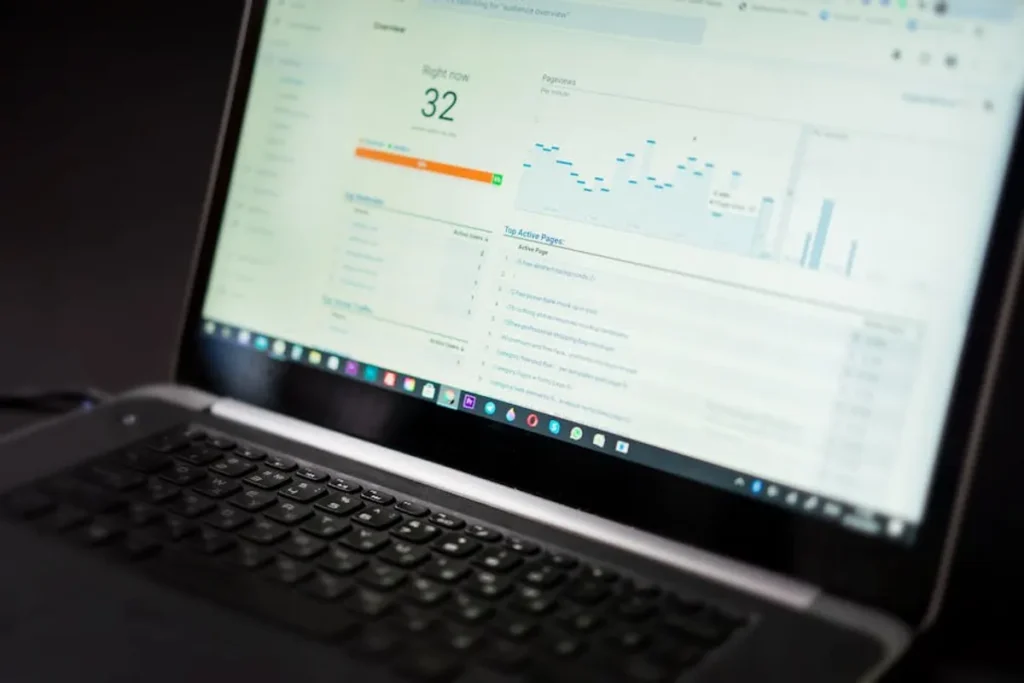
An algorithm volatility tracker shows when Google’s search results are unusually unstable, which keywords, sectors, or device types are moving most, and whether the turbulence looks broad enough to suggest an update pattern rather than normal day-to-day rank noise. For SEOs, publishers, agencies, and in-house analysts, the tool is most useful when rankings shift quickly and you need to separate isolated visibility loss from market-wide SERP disruption.
What an algorithm volatility tracker does
SERP Volatility monitors ranking movement across a broad keyword set and turns that movement into practical volatility signals. Instead of looking at a single site in isolation, it measures how much the search landscape is changing overall, then helps you compare those shifts by date, device, market segment, and query group.
At a practical level, the tool helps answer four immediate questions:
Is today’s ranking movement normal, elevated, or extreme? Are the shifts concentrated in a few verticals or visible across many result sets? Did the turbulence begin suddenly or build over several days? Does the pattern resemble a Google update rollout, a test, or localized SERP reshuffling?
That context matters. A site can lose positions during a high-volatility period without being uniquely targeted. Equally, a site can drop during a calm period, which usually points more strongly to site-specific issues such as technical changes, indexing problems, template updates, content edits, or link-related events.
When to use a volatility tracker
Use an algorithm volatility tracker whenever you need to interpret ranking changes, not just record them. The highest-value moments are usually the ones where standard rank tracking creates more questions than answers.
During sudden ranking swings
If multiple pages move at once, volatility data helps determine whether the movement aligns with wider SERP instability. This is often the fastest way to avoid misdiagnosing a broad search event as a site-only problem.
After technical or content deployments
When rankings change after a migration, template release, internal linking update, or content refresh, volatility data gives you a control layer. If the wider SERP is calm, your deployment deserves closer scrutiny. If the market is turbulent, attribution should be more cautious.
While monitoring suspected Google updates
Not every spike means a confirmed update, but repeated elevated movement across sectors often signals a meaningful change in ranking systems, result layouts, or query interpretation. A dedicated tracker helps you spot patterns before official confirmation appears, if it appears at all.
For client reporting and stakeholder communication
Agencies and in-house teams often need to explain why rankings moved this week. Volatility data gives reports necessary context: whether losses happened in an unstable environment, whether competitors were affected too, and whether the best next step is remediation, observation, or deeper investigation.
How to read volatility signals correctly
The most common mistake is treating every spike as proof of a major algorithm update. A better approach is to read volatility as a signal of abnormal SERP movement, then validate it against your own data, competitor trends, and page-level changes.
High volatility means unstable results, not automatic penalty
When volatility rises, rankings are being reordered more aggressively than usual. That can happen because of core update-like recalculations, intent remapping, fresh result testing, local pack changes, feature reshuffling, or vertical-specific adjustments. The signal tells you the SERP is moving; it does not, by itself, explain why your site moved.
Pattern duration matters more than one-day spikes
A single sharp day can reflect temporary testing or data refreshes. Multi-day turbulence is usually more meaningful, especially when movement persists across devices and keyword classes. Sustained instability often deserves closer review of winners, losers, and page type changes.
Segment-level analysis is where the value is
Broad market volatility is useful, but the strongest operational insight comes from segmentation. Compare branded versus non-branded queries, informational versus commercial intent, desktop versus mobile, and category-level keyword groups. This reveals whether your losses align with a specific SERP pattern or a business-critical search segment.
Practical benefits for SEO teams
- Distinguish site-specific ranking loss from market-wide SERP turbulence
- Prioritize investigations based on calm versus unstable search conditions
- Add credible context to client, executive, and publisher reporting
- Spot likely update windows earlier and monitor rollout behavior over time
What to do when volatility is high
High turbulence should change your response, not trigger panic. The right move is usually to slow down attribution, increase monitoring frequency, and compare your site against external signals.
Check whether affected keywords match volatile segments
If your biggest losses are concentrated in sectors already showing elevated movement, treat the event as potentially systemic. Review competitor visibility, result type changes, and whether top-ranking pages are being replaced by different content formats or intent classes.
Avoid rushing into unnecessary fixes
During unstable periods, many rankings partially reverse as rollout conditions settle. That does not mean you should ignore losses, but it does mean large structural changes should be based on evidence rather than a single volatile day.
Use calm periods for stronger diagnosis
If rankings remain down after volatility normalizes, your analysis becomes more reliable. That is the moment to audit page quality, internal linking, crawlability, canonicals, rendering, duplication, and competitive content gaps with greater confidence.
Short workflow example
An agency sees a publisher lose visibility across review and comparison pages on Tuesday. In SERP Volatility, the team checks the same date and finds elevated turbulence in commercial query sets, especially on mobile. They compare three competitors and see similar reshuffling. Instead of escalating a technical emergency, they label the event as likely market-wide instability, monitor for 72 hours, and then review which page templates failed to recover after volatility cooled. That keeps the response measured and prevents unnecessary sitewide changes.
How SERP Volatility fits into a broader analysis stack
An algorithm volatility tracker works best alongside rank tracking, Search Console, analytics, crawling, and competitor monitoring. Rank trackers tell you what moved for your site. Search Console shows clicks, impressions, and query-level changes. Crawlers identify technical causes. SERP Volatility adds the missing layer: whether the search environment itself is unstable.
That combination is especially valuable for agencies managing multiple clients and publishers exposed to broad keyword portfolios. It helps teams decide whether to open a technical incident, prepare update communications, or simply continue observing a likely rollout.
FAQ
Is a volatility spike the same as a Google update?
No. A spike indicates unusual SERP movement. It may reflect an update, a test, a recalculation, or vertical-specific reshuffling. Use it as evidence of instability, not final proof of cause.
How often should I check an algorithm volatility tracker?
Daily is useful for active SEO teams, and more frequent checks make sense during suspected update windows, migrations, or unexplained ranking shifts.
Can volatility data explain why my site dropped?
Not by itself. It tells you whether the wider SERP was unstable when the drop happened. You still need page-level, technical, and competitive analysis to determine likely causes.
Who gets the most value from SERP Volatility?
Agencies, publishers, in-house SEO teams, and analysts who need to interpret unstable rankings quickly and communicate whether movement looks isolated or market-wide.