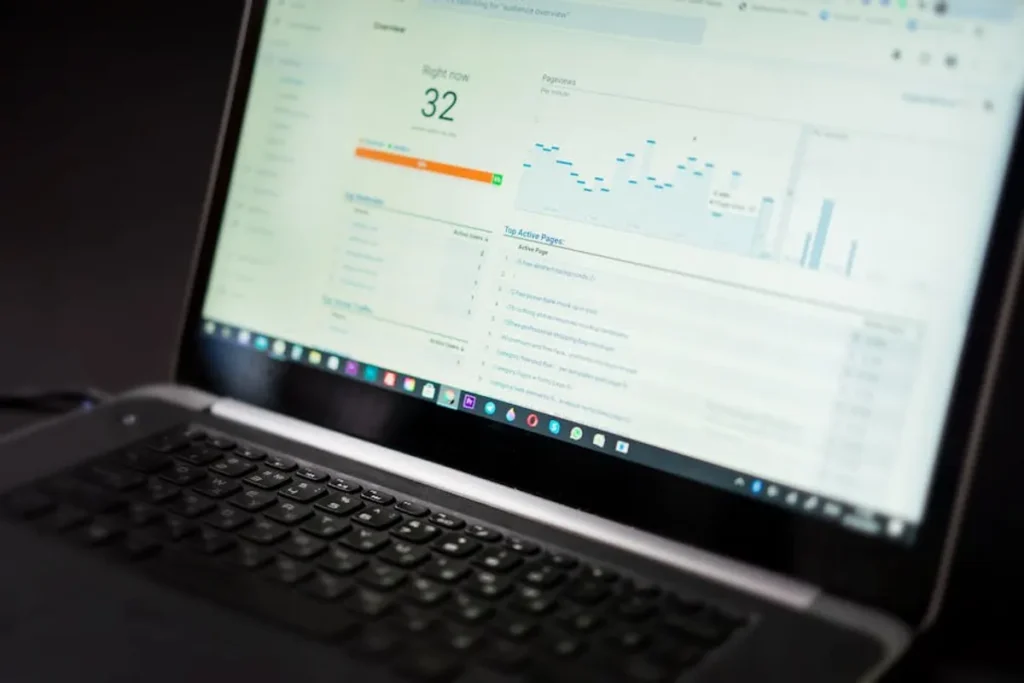
SERP Volatility surfaces abnormal ranking movement across search results so SEOs can quickly separate routine keyword churn from likely algorithm-driven turbulence. The tool aggregates volatility signals, highlights unstable SERP segments, and helps teams decide whether a traffic drop is isolated to a site, concentrated in a niche, or part of a broader update pattern. If rankings are moving faster than normal, it gives you an early read on where the instability is happening and how severe it appears.
What the tool does
Algorithm Volatility Insights is built to monitor ranking shifts at the market level, not just at the single-domain level. Instead of showing only whether your positions changed, it shows whether search results themselves are unusually unstable. That distinction matters: a site losing positions during a calm period often points to site-specific issues, while losses during a high-volatility window may be tied to broader SERP reshuffling.
The platform tracks movement patterns across keyword sets, compares current fluctuation against baseline behavior, and identifies where turbulence is clustering. For analysts, that means faster triage. For agencies, it means better client communication. For publishers, it means less guesswork when traffic changes do not line up neatly with on-site edits.
Core signals it highlights
The most useful volatility signals are the ones that help explain context, not just movement. SERP Volatility emphasizes:
- Unusual ranking displacement across tracked keyword groups
- Spikes in day-over-day SERP reshuffling
- Patterns by vertical, intent class, or result type
- Persistence of turbulence across multiple days
- Timing overlaps between ranking instability and suspected update windows
This makes the tool useful for diagnosing whether a ranking event looks like a temporary shake-up, a staged rollout, or a more durable recalibration of search results.
When to use Algorithm Volatility Insights
Use it whenever rankings or organic traffic move in ways that are too broad, too sudden, or too inconsistent to explain with normal variance. The best use cases are not limited to confirmed updates. In practice, most teams need volatility intelligence before search engines confirm anything publicly.
Use it during traffic drops
If a site loses visibility, the first question is whether the loss is local or systemic. A volatility view helps answer that quickly. If the wider SERP is calm, your investigation should prioritize technical changes, indexing issues, content quality shifts, internal linking, or competitive displacement. If the wider SERP is unstable, the right move is often to avoid overreacting until the pattern becomes clearer.
Use it after major site changes
Redesigns, migrations, template changes, internal linking updates, and content consolidation can all affect rankings. Volatility context helps prevent false attribution. If your changes went live during a turbulent period, not every ranking swing should be blamed on implementation.
Use it for client reporting and stakeholder updates
Agencies and in-house teams often need to explain movement before a full forensic review is complete. Volatility data provides a defensible narrative: whether the market is stable, which keyword groups are most affected, and whether the pattern matches broader ranking turbulence. That is far more useful than saying rankings changed without context.
How to interpret unstable results
Not all volatility means the same thing. The practical value comes from reading the pattern correctly.
Short spikes vs. sustained turbulence
A one-day spike can indicate testing, temporary result mixing, or a narrow recalculation affecting specific query classes. Multi-day instability is more likely to reflect a broader update rollout or a significant reordering of result sets. If volatility remains elevated for several days, wait for the pattern to settle before making large-scale corrective changes.
Vertical concentration matters
If turbulence is clustered in a single category, such as health, finance, local, or news-oriented queries, the impact may be vertical-specific rather than universal. This matters for prioritization. A publisher in a stable segment should not assume every market-wide headline applies equally to them. A site in the affected segment should review impacted templates, content types, and intent alignment first.
Ranking movement without traffic movement
Sometimes SERPs are volatile but clicks hold relatively steady. That often happens when position changes occur below the fold, when result features absorb demand, or when query mixes shift without changing top landing pages materially. Volatility should be read alongside clicks, impressions, and page-level visibility, not in isolation.
Update patterns the tool helps identify
SERP turbulence tends to leave recognizable footprints. Algorithm Volatility Insights helps teams spot patterns such as broad market tremors, staggered rollouts, query-intent rewrites, and result-feature disruptions. These patterns can guide response strategy.
Broad recalibration patterns
When many sectors show elevated movement at once, the likely story is a wider ranking recalibration. In these cases, avoid page-by-page panic. Look for common traits among winners and losers: content depth, freshness, authority signals, intent match, and SERP feature fit.
Intent remapping patterns
Sometimes rankings change because search intent interpretation changes, not because pages suddenly became weaker. If informational pages are replaced by commercial pages, or category pages begin outranking guides, the issue is often intent remapping. The response should focus on page type alignment and search journey coverage.
Feature-driven disruption
Volatility can also come from changes in SERP composition. If result pages add or expand rich features, traditional organic listings may shift even when domain relevance remains similar. Analysts should check whether ranking losses correspond with greater feature saturation rather than direct competitor gains.
A practical workflow for SEO teams
Use this simple workflow when rankings move unexpectedly:
- Check whether volatility is elevated across your tracked market or niche.
- Segment affected keywords by intent, template, device, and result type.
- Compare site movement against broader SERP movement over the same window.
- Review whether losses are persistent or still fluctuating.
- Decide whether to monitor, investigate site issues, or prepare recovery actions.
Example: an agency sees a publisher lose top-three rankings across review queries over 48 hours. Volatility data shows sustained instability in commercial investigation SERPs, while informational queries remain relatively calm. The team delays unnecessary template edits, audits review-page intent alignment, checks competitor page formats, and prepares a focused client update based on a likely segment-specific algorithm shift rather than a full-site failure.
How this helps commercial SEO decision-making
Volatility intelligence is not just diagnostic; it improves operating decisions. Teams can prioritize analyst time more effectively, avoid reactive changes during unstable periods, and identify when a ranking event deserves immediate intervention. For agencies, this reduces noisy reporting cycles. For publishers, it lowers the risk of misreading temporary turbulence as a permanent loss. For enterprise SEO teams, it supports faster escalation when instability affects high-value query groups.
The commercial advantage is speed with context. Knowing that rankings changed is useful. Knowing whether the whole SERP is in motion is what makes response planning credible.
FAQ
Is volatility the same as an algorithm update?
No. Volatility is a signal that search results are moving unusually fast. It can indicate an update, a test, a vertical-specific recalculation, or a temporary reshuffle.
Should I make changes immediately during a volatility spike?
Usually not. If turbulence is widespread, wait to see whether the movement persists before making major changes, unless you also find clear site-specific problems.
Can this help explain client ranking drops?
Yes. It gives context for whether losses appear isolated to the client or consistent with broader SERP instability affecting the market.
What is the biggest mistake when reading volatility data?
Treating every ranking movement as a site issue. Without market context, teams often overcorrect during periods when the SERP itself is unstable.