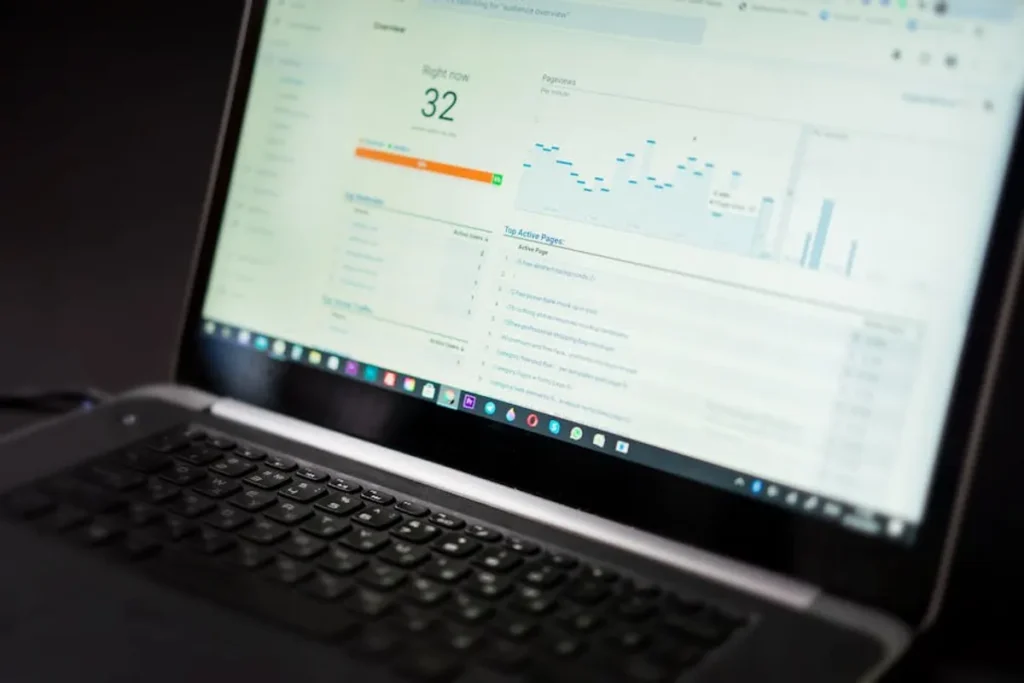
The Ranking Volatility Index Tool from SERP Volatility measures how unstable search results are for the keywords, categories, devices, and locations you monitor. Instead of only showing where a page ranks, it highlights when the SERP itself is shifting unusually fast, which is the signal most teams need before diagnosing traffic swings, update impact, or competitor gains. Use it to separate normal daily movement from meaningful turbulence, spot update-like patterns early, and decide whether to investigate, wait, or act.
What the Ranking Volatility Index Tool does
This tool converts ranking movement across a tracked keyword set into a practical volatility score. It analyzes how much positions change over time, how many URLs enter or leave the visible results, whether movement is concentrated in a few terms or spread across an entire segment, and how those patterns differ by device, market, and SERP type. The result is a clear index that tells you whether rankings are stable, elevated, or abnormally turbulent.
For SEO teams, that matters because a traffic drop during a stable period often points to page-level or site-level issues, while a drop during a high-volatility window may reflect broader SERP reshuffling. The same logic applies to gains: if visibility rises during a turbulent period, the tool helps determine whether the lift is durable or simply part of temporary churn.
When to use it
Use the Ranking Volatility Index Tool whenever rankings or organic traffic move faster than expected and you need context before making changes. It is especially useful during suspected algorithm updates, after major site releases, around seasonal query shifts, and when clients ask whether a decline is isolated or market-wide.
Best-fit scenarios
The tool is most valuable in situations where rank tracking alone creates false urgency or false confidence:
- Traffic drops with no obvious technical error
- Sudden ranking swings across multiple keyword groups
- Competitor gains that may be tied to broader SERP reshuffling
- Post-migration or post-content-release monitoring
- Agency reporting during suspected Google update periods
How to interpret the volatility signals
A volatility index is only useful if it helps you make better decisions. The tool is designed to show not just that movement happened, but what kind of movement happened and how concentrated it is.
Baseline versus abnormal movement
Every keyword set has a normal range of fluctuation. News-driven terms, local packs, and highly commercial queries often move more than informational long-tail terms. The tool benchmarks current movement against recent historical behavior so you can see whether today looks routine for that segment or materially outside its normal range.
Broad turbulence versus isolated instability
If volatility rises across many categories at once, that often suggests a wider SERP event, such as a core update pattern, a broad recalibration of intent matching, or a major change in result composition. If volatility is isolated to one topic cluster, one device, or one location, the cause is more likely to be niche competition, content mismatches, local intent shifts, or feature-level changes.
Position changes versus URL replacement
Not all ranking movement is equal. A keyword can show modest position changes while the underlying URLs remain largely the same, which usually indicates mild reshuffling. By contrast, heavy URL replacement in the top results often signals stronger instability and a more meaningful change in what Google prefers for that query set. The tool helps distinguish between these patterns so teams do not overreact to minor rank noise.
How SEOs and publishers use the tool in practice
For publishers, the tool helps determine whether a visibility loss is tied to article freshness, section-level authority, or a broader market event. For agencies, it creates a defensible way to explain client performance during unstable periods. For in-house teams, it improves prioritization by showing whether to focus on technical validation, content alignment, internal linking, or simply continued observation.
Practical benefits
- Detect unusual SERP turbulence before traffic reports fully reflect it
- Separate site-specific issues from market-wide ranking instability
- Compare volatility by device, location, category, or keyword segment
- Improve update monitoring and stakeholder communication
What to review alongside the index
The volatility score should not be read in isolation. The most useful workflow is to pair it with page-level ranking changes, visibility trends, SERP feature shifts, and landing page performance. If the index spikes while featured snippets, local packs, product modules, or forum results expand, the issue may be less about classic blue-link ranking loss and more about changing result composition.
You should also compare branded and non-branded keyword sets. If volatility is concentrated in non-branded discovery terms, the likely cause is broader query interpretation or competition. If branded terms are unstable too, investigate technical issues, indexing anomalies, or entity-level confusion.
Workflow example: diagnosing a sudden visibility drop
An ecommerce SEO team sees a 14% non-branded traffic decline over three days. Before rewriting category pages, they open the Ranking Volatility Index Tool and segment their tracked terms by device and product category. The index shows elevated turbulence on mobile across several commercial keyword groups, while desktop remains near baseline. They then review SERP snapshots and notice increased shopping modules and more frequent URL replacement among top-ranking category pages. Instead of treating the drop as a sitewide content failure, they classify it as a mobile-heavy SERP shift, pause unnecessary page edits, monitor affected categories daily, and prioritize testing product feed visibility and on-page commercial intent alignment.
What makes a volatility index commercially useful
A useful index does more than visualize movement. It has to support decisions. That means reliable historical baselines, segmentation controls, enough keyword coverage to avoid misleading spikes, and reporting views that help analysts explain what changed. For agencies and enterprise teams, the commercial value is speed: the faster you can tell whether instability is systemic or isolated, the faster you can assign the right workstream and avoid wasting time on the wrong diagnosis.
It also improves reporting quality. Instead of telling stakeholders that rankings moved, you can show whether the market entered a high-turbulence period, whether competitors were affected similarly, and whether the pattern resembles a temporary reshuffle or a sustained reordering of results.
FAQ
Is ranking volatility the same as a Google update?
No. High volatility is a signal that the SERP is unstable, not proof of a confirmed update. It often appears during updates, but it can also reflect seasonal shifts, news events, feature changes, or query intent recalibration.
How often should I check the tool?
Daily is ideal for active monitoring, especially for competitive or update-sensitive keyword sets. During suspected turbulence, checking multiple segments each day is useful.
Can the tool help explain traffic drops?
Yes. It helps you determine whether a drop happened during a stable environment or during broader SERP disruption, which changes how you investigate and communicate the issue.
Should I make immediate SEO changes when volatility spikes?
Not always. A spike is a prompt to investigate context first. If the market is broadly unstable, immediate edits can be premature. Confirm whether the issue is isolated, sustained, and tied to your pages before acting.