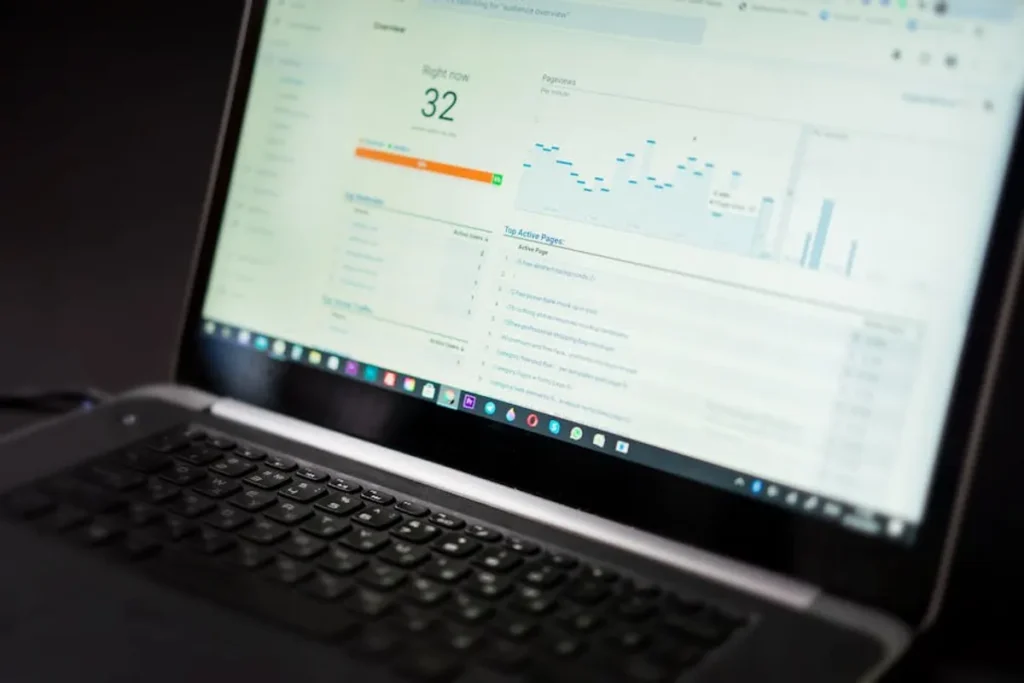
SERP Volatility’s Ranking Volatility Monitor shows when search results are unstable, which keywords are moving most, and whether a ranking change is likely tied to broader SERP turbulence rather than an isolated site issue. It helps SEOs, publishers, agencies, and analysts separate normal day-to-day movement from meaningful volatility signals, so they can interpret ranking shifts faster and respond with better context.
What the Ranking Volatility Monitor does
The monitor tracks ranking movement across keyword sets and surfaces unusual fluctuations that indicate unstable search results. Instead of looking only at whether one page moved up or down, it measures the surrounding environment: how many URLs are changing, how sharply positions are shifting, whether movement is concentrated in specific verticals, and whether the pattern resembles a broad algorithmic disturbance or a localized SERP reshuffle.
For teams managing SEO performance, that distinction matters. A drop during a calm period often points to page-level, technical, or competitive issues. A drop during a high-volatility window may reflect market-wide turbulence, temporary result testing, or an update pattern affecting many domains at once. The tool is built to make that difference visible quickly.
When to use a Ranking Volatility Monitor
Use it whenever rankings move and you need to know whether the change deserves immediate action, deeper investigation, or patience. It is especially useful during suspected Google updates, after major site releases, when traffic changes do not match internal expectations, or when clients ask whether a decline is specific to their site.
The monitor is also valuable before making recommendations. If results are highly unstable, aggressive changes based on one day of movement can create noise rather than improvement. If volatility is low and losses persist, the case for technical audits, content revision, internal linking work, or competitive analysis becomes stronger.
Most useful scenarios
- Diagnosing sudden ranking drops against wider SERP instability
- Validating whether a suspected update is producing measurable turbulence
- Explaining performance swings to stakeholders with market context
- Prioritizing investigations by separating broad volatility from site-specific losses
How to interpret volatility signals
A useful volatility monitor does more than assign a single “hot” or “calm” label. It should show the intensity, duration, and spread of ranking movement. Short spikes can indicate temporary result testing. Multi-day turbulence often suggests a larger recalibration. Category-specific volatility may point to update patterns affecting local, news, ecommerce, health, or review-driven queries differently.
At SERP Volatility, the practical value is in reading those signals alongside your own ranking and traffic data. If your tracked keywords are down while the broader market is quiet, investigate your pages, indexing, content quality, and competitors. If your keywords are down during a strong market-wide spike, compare query classes, page types, and affected templates before assuming a direct site problem.
Signals that usually matter most
Not every movement deserves the same weight. Analysts typically get the clearest picture by focusing on a few core patterns:
- Severity: how far rankings are moving, not just how often
- Breadth: whether volatility affects a narrow keyword segment or many query groups
- Persistence: whether instability lasts hours, days, or longer
- SERP type impact: whether movement is stronger in featured, local, ecommerce, or informational results
How the monitor helps during update patterns
During algorithm update periods, rankings rarely move in a clean, linear way. Results may reverse, settle, and shift again as Google tests relevance, authority, freshness, or intent alignment. A volatility monitor helps identify whether you are seeing a single-day anomaly or a broader update pattern that is still unfolding.
This is commercially useful because it changes how teams allocate time. Agencies can avoid overreacting to temporary turbulence. Publishers can delay unnecessary content rewrites while watching whether visibility stabilizes. In-house SEO teams can brief leadership with evidence that ranking shifts are part of a wider unstable period, then reserve engineering or editorial resources for issues that persist after volatility cools.
Using volatility data with ranking and traffic analysis
The best use of a monitor is not in isolation. Pair volatility readings with keyword-level ranking changes, landing page groups, device splits, country data, and organic traffic trends. This gives you a more reliable interpretation of what changed and why.
For example, if volatility is elevated across informational queries but your commercial pages remain steady, the issue may be limited to top-of-funnel content. If mobile SERPs are turbulent while desktop is relatively calm, review mobile UX, page speed, and mobile result composition. If rankings are volatile but clicks are stable, the shift may be happening lower on the page or within query sets that do not materially affect traffic.
Short workflow example
An agency notices a 12% visibility drop across a client’s non-brand keywords on Tuesday morning. Before changing titles or rewriting pages, the team checks the Ranking Volatility Monitor and sees a strong multi-day spike affecting the same query class across the market. They segment the client’s losses by page type, compare competitor movement, and wait 48 hours. By Thursday, half the losses reverse naturally, and the remaining declines are isolated to outdated category pages. The team then focuses only on those pages instead of launching a broad, unnecessary rewrite project.
What makes a volatility monitor commercially useful
A practical monitor should help teams make better decisions, not just confirm that rankings moved. That means clear trend visibility, timely detection of unstable periods, segmentation that reflects how real SEO programs operate, and enough context to support reporting, triage, and prioritization.
For agencies, this improves client communication and reduces reactive work. For publishers, it helps distinguish editorial performance issues from market-wide turbulence. For enterprise teams, it supports faster escalation when instability is concentrated in high-value keyword groups or critical page templates.
How to use the monitor inside a reporting routine
Check volatility daily, but interpret it weekly and by event window. Daily checks help catch sudden turbulence. Weekly review helps determine whether movement was noise, a sustained update pattern, or the start of a competitive shift. Tie the readings to annotation logs for deployments, migrations, content releases, and known search update chatter. Over time, this creates a stronger baseline for deciding when ranking shifts are normal and when they signal a real performance issue.
If you report to clients or executives, include volatility context next to visibility and traffic charts. That prevents misleading narratives built on isolated ranking snapshots. A ranking decline during a calm market should trigger a different discussion than the same decline during heavy SERP instability.
FAQ
What is ranking volatility in SEO?
Ranking volatility is the degree of movement in search results over a given period. High volatility means many rankings are shifting unusually fast or far, often during update activity or result testing.
How is a volatility monitor different from a rank tracker?
A rank tracker shows where your keywords rank. A volatility monitor shows how unstable the wider SERP environment is, helping you interpret whether ranking changes are isolated or market-wide.
When should I act on ranking drops during high volatility?
Act immediately if the issue is clearly technical or indexing-related. Otherwise, confirm whether the losses persist after the unstable period before making broad content or structural changes.
Who should use a Ranking Volatility Monitor?
It is most useful for SEOs, publishers, agencies, and analysts who need to explain ranking shifts, detect update patterns, and prioritize investigations during unstable search periods.