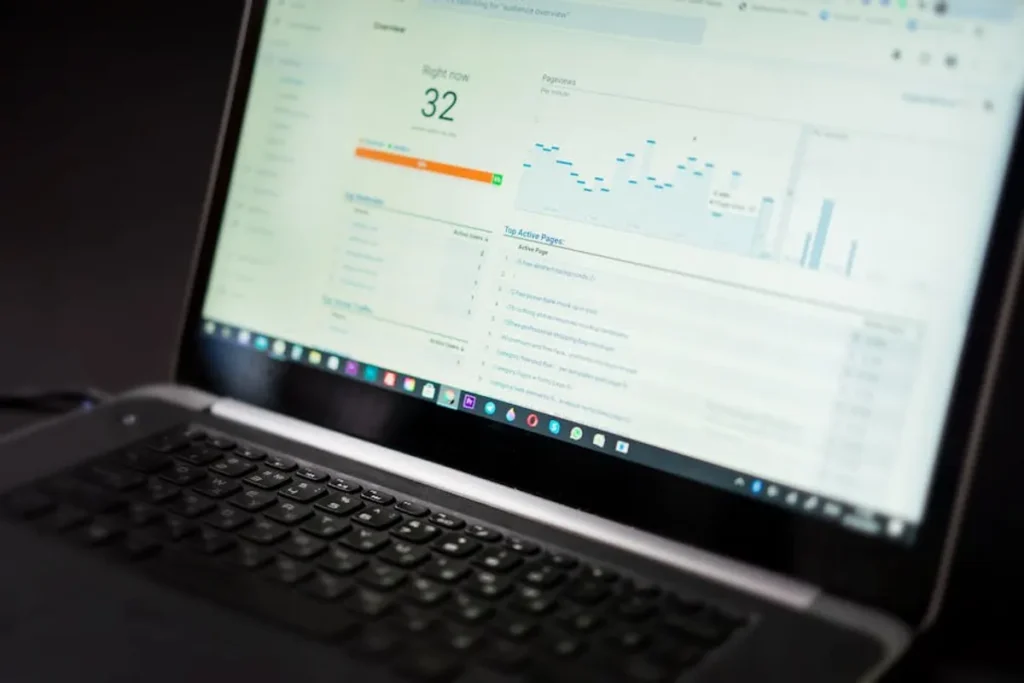
The Search Volatility Analysis Tool from SERP Volatility shows when Google results are unusually unstable, which keyword groups are moving most, and whether the pattern looks like a broad algorithm shift, a vertical-specific disturbance, or normal day-to-day churn. Instead of only reporting position gains and losses, it helps SEOs interpret the shape of ranking movement: how fast it is happening, how widespread it is, and whether the turbulence is concentrated in specific intents, device types, or SERP layouts.
What the Search Volatility Analysis Tool does
This tool analyzes ranking turbulence across tracked keyword sets and turns raw movement into usable volatility signals. It measures how much rankings are changing over time, compares current movement against recent baselines, and highlights abnormal periods where search results are behaving outside expected ranges.
For SEO teams, that means you can separate three very different scenarios:
- an actual update pattern affecting many keywords at once,
- a localized issue tied to one page type, market, or intent cluster,
- routine fluctuation that does not justify a major response.
The practical value is speed. When rankings move sharply, the first question is not “did we go up or down?” but “is this isolated or systemic?” A volatility analysis tool answers that quickly by showing movement intensity, breadth, and timing.
How it interprets ranking turbulence
Search results are never static, so the tool does not treat every position change as meaningful. It looks for volatility signals that indicate unstable SERPs rather than ordinary reshuffling. These signals typically include sudden increases in ranking displacement, synchronized movement across many keywords, repeated reversals over short periods, and unusual changes in the composition of top results.
Baseline vs abnormal movement
Every keyword set has its own normal rhythm. News queries, local packs, product terms, and YMYL topics can all behave differently. The tool compares current movement to historical baselines so that a “high volatility” alert reflects real deviation, not just a naturally active SERP category. This matters because a five-position swing in one niche may be routine, while the same movement in another may indicate a major update wave.
Segment-level volatility
Useful analysis happens below the sitewide level. The tool can isolate turbulence by keyword intent, page template, device, geography, or SERP feature presence. That lets analysts see whether instability is concentrated in informational content, commercial pages, local results, product grids, or AI-influenced layouts. Segmenting volatility is often the fastest way to identify what kind of update pattern is unfolding.
Timing and update patterns
Volatility is more useful when viewed as a sequence rather than a single spike. The tool helps detect whether movement is arriving in one sharp burst, rolling out over several days, or recurring in waves. Those patterns often change how teams should respond. A one-day disturbance may not require intervention, while a sustained multi-day pattern may justify deeper audits, stakeholder updates, and temporary reporting caveats.
When to use the tool
Use the Search Volatility Analysis Tool whenever rankings are moving and you need to know whether the movement deserves action. It is most valuable in periods of uncertainty, especially when stakeholders are asking for explanations before the picture is fully settled.
During suspected Google updates
When industry chatter rises and ranking swings appear across multiple domains, the tool helps confirm whether your keyword sets are showing update-like instability. This is where volatility context matters more than isolated keyword wins or losses. If turbulence is broad and synchronized, immediate page-by-page changes may be premature.
After a traffic drop or surge
A traffic change alone does not reveal whether the cause is site-specific. The tool can show whether your visibility shift happened inside a wider unstable SERP environment. If the market is broadly turbulent, the right response may be monitoring and segmentation before remediation.
Before escalating technical or content investigations
Teams often overreact to short-term ranking movement. Checking volatility first can prevent wasted audits. If the tool shows normal conditions, a site-level issue becomes more likely. If it shows elevated turbulence across the same keyword clusters, the safer interpretation may be external volatility rather than internal failure.
Practical benefits for SEO teams
- Distinguish update-driven turbulence from isolated ranking loss
- Prioritize investigations by affected keyword segments
- Improve stakeholder reporting during unstable periods
- Reduce unnecessary reactive changes while results are still shifting
How agencies and publishers use volatility analysis
Agencies use the tool to explain performance changes across client portfolios without relying on guesswork. If several clients in different sectors show synchronized turbulence, the agency can frame the event as a broader SERP instability pattern rather than a set of unrelated account problems. That improves communication and helps teams decide which accounts need immediate intervention.
Publishers use volatility analysis to understand whether editorial sections are being re-ranked unevenly. For example, a publisher may find that evergreen guides remain stable while news-adjacent explainers are fluctuating heavily. That distinction can change both content strategy and reporting cadence.
In-house SEO teams often use the tool as an early warning layer. Before launching a full diagnostic review, they check whether unstable results are concentrated around certain templates, query classes, or device segments. This narrows the scope of analysis and speeds up decision-making.
A short workflow example
An ecommerce SEO team sees a 14% visibility drop over 48 hours. They open the Search Volatility Analysis Tool and compare current movement to the previous 30-day baseline. The tool shows elevated volatility across commercial keywords, especially mobile results with heavy product-feature presence. Informational keywords remain mostly stable. Based on that pattern, the team delays major on-page edits, flags the event as likely market-wide turbulence, and monitors category pages separately from buying guides for the next three days before deciding whether deeper remediation is needed.
What to look for in unstable results
Not all volatility deserves the same response. The most actionable signals are breadth, persistence, and concentration. Breadth tells you how many keyword groups are affected. Persistence shows whether the movement is fading or compounding. Concentration reveals whether the instability is tied to a specific SERP environment, such as local intent, product-heavy queries, or informational clusters.
If volatility is broad and persistent, reporting should emphasize uncertainty and delayed interpretation. If it is narrow and concentrated, teams can move faster toward targeted audits. The tool is most effective when used as an interpretation layer, not just an alert system.
FAQ
Is search volatility the same as a ranking drop?
No. Volatility measures instability in search results overall or within a segment. A ranking drop may happen during stable conditions or during a broader turbulent period.
Can the tool confirm a Google update?
It can identify patterns consistent with an update, such as widespread abnormal movement, but it should be used alongside site data, segment analysis, and observed SERP changes.
Should I make immediate SEO changes during high volatility?
Usually not by default. If results are still unstable, it is often better to monitor persistence and isolate affected segments before making major changes.
Who benefits most from this tool?
Agencies, publishers, in-house SEO teams, and analysts who need to interpret ranking turbulence quickly and explain unstable results with confidence.