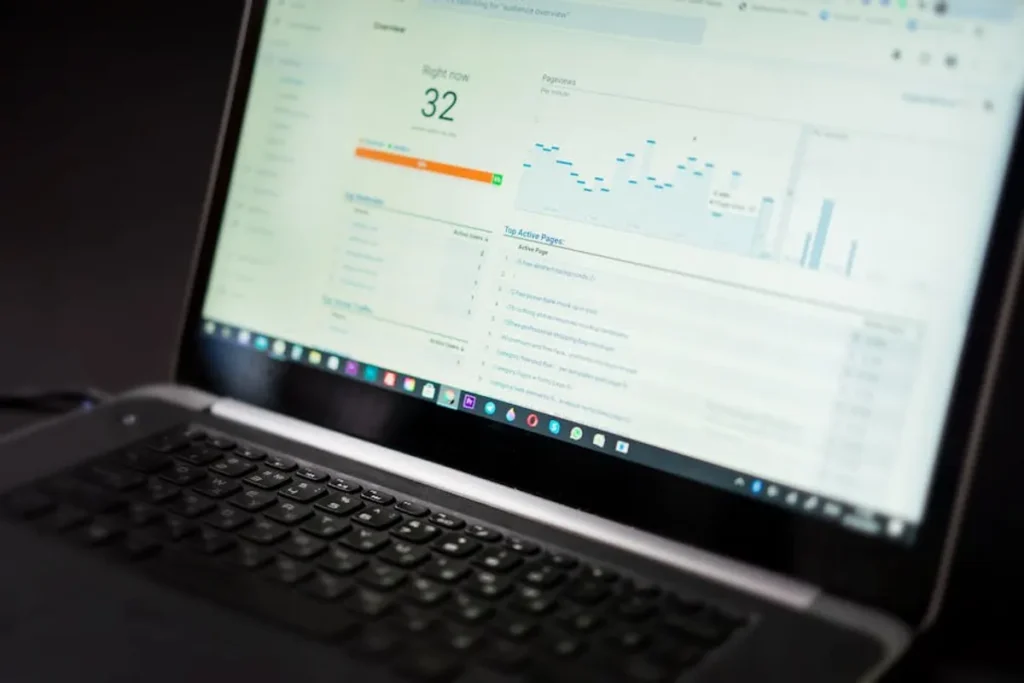
A search volatility detection tool identifies unusual movement in Google rankings across keywords, pages, devices, and locations so you can tell whether a drop is isolated to your site or part of a wider SERP shake-up. For SEOs, publishers, agencies, and in-house teams, the value is speed: instead of reacting blindly to every visibility change, you can confirm whether the market is unstable, which query groups are moving most, and whether the pattern looks like a broad algorithmic recalculation, a vertical-specific disturbance, or a competitor-led reshuffle.
What a search volatility detection tool does
SERP Volatility tracks ranking turbulence over time and turns noisy position changes into interpretable signals. Rather than showing only whether a keyword moved up or down, the tool measures how unstable the results are across a monitored set of queries. That matters because a five-position drop during a calm period often means something very different from a five-position drop during a high-volatility window.
In practice, the tool helps you detect:
- abnormal ranking swings across keyword sets
- device-specific turbulence on mobile or desktop
- location-based instability in local or national SERPs
- category-level disruption affecting news, ecommerce, health, finance, or other verticals
- patterns that align with likely Google updates, testing phases, or result reordering
Instead of treating all movement as equal, a volatility model compares current SERP behavior with historical baselines. When movement exceeds normal ranges, it flags a potential disturbance. This makes it easier to separate routine fluctuation from meaningful instability.
When to use a search volatility detection tool
Use it as soon as rankings move in a way that changes traffic expectations, reporting confidence, or optimization priorities. The tool is especially useful when position changes happen quickly across many pages, when clients ask whether “Google updated something,” or when your reporting period includes unexplained visibility loss.
Use it during sudden ranking drops
If a set of pages loses positions overnight, volatility data helps answer the first operational question: is this a site problem or a SERP-wide event? If the wider market is turbulent, you may need to delay page-level diagnosis and watch for stabilization before making aggressive changes.
Use it after major site changes
When you launch a migration, rewrite templates, change internal linking, or update structured data, volatility monitoring prevents false attribution. If rankings shift during a highly unstable search period, not every movement should be blamed on your deployment.
Use it for client and stakeholder reporting
Agencies and in-house teams need context, not just charts. A volatility signal gives stakeholders a way to understand whether performance changes happened in a stable environment or during broad ranking turbulence. That improves communication and reduces rushed recommendations.
Use it to prioritize investigation
Not every dip deserves a full audit. If volatility is low and only one section is affected, the issue is more likely tied to relevance, indexing, internal competition, or page quality. If volatility is high across many query clusters, the right move may be to monitor, segment, and wait for patterns to settle.
How SERP Volatility helps interpret unstable results
The main advantage of SERP Volatility is interpretation. Raw rank tracking tells you what moved. Volatility analysis helps explain the environment those movements happened in. That distinction is critical when Google is testing layouts, reweighting intent, or rotating result types.
Spot broad turbulence versus isolated loss
If multiple unrelated keyword groups show simultaneous movement, the tool can indicate whether the disturbance is market-wide. That helps rule out narrow technical causes and supports a more measured response.
Read update-like patterns earlier
Many ranking disturbances follow recognizable patterns: a sharp spike, a multi-day churn period, temporary reversals, or staggered movement by vertical. Tracking those signatures helps you identify whether you are seeing a probable update rollout, a test phase, or a short-lived SERP experiment.
Segment volatility by query type
Informational queries, commercial terms, local-intent phrases, and news-sensitive topics often behave differently during unstable periods. Segmenting by intent or page type helps you find where disruption is concentrated instead of averaging everything into a single misleading number.
What to look for in a volatility signal
Not all spikes mean the same thing. A practical volatility tool should help you judge severity, duration, and concentration.
Severity
How far current movement exceeds normal daily churn. Mild turbulence may require only observation. Extreme spikes often justify immediate segmentation and competitor review.
Duration
One unstable day is different from a week of sustained movement. Extended turbulence often signals recalculation, rollout expansion, or repeated testing.
Concentration
Look at whether volatility is spread across the whole keyword set or clustered in one directory, template, device, or intent class. Concentrated instability often points to more actionable causes.
Practical workflow for using the tool
Use a simple triage process so volatility data leads to action rather than more dashboard watching.
Example workflow
On Tuesday morning, a publisher sees a 14% visibility drop in article pages targeting product review queries. In SERP Volatility, the team checks the same query cluster and finds elevated turbulence across mobile results over the last 48 hours, with similar movement among competing domains. They then segment affected pages by template, confirm indexing and crawl health are stable, pause unnecessary on-page rewrites, and monitor whether rankings settle before making structural changes. By Thursday, the volatility cools and half the lost positions return, confirming that the initial drop was partly market-wide rather than purely site-driven.
Commercial benefits for SEO teams and agencies
A volatility detection tool is not just diagnostic; it improves operational decisions.
- reduce false alarms during unstable SERP periods
- improve client explanations with market context
- prioritize audits where losses happen in calm conditions
- spot likely update windows earlier
- protect teams from overcorrecting during temporary churn
How to use volatility data alongside rank tracking
Rank tracking and volatility detection work best together. Rank tracking shows the movement of your monitored keywords. Volatility detection adds environmental context. If rankings fall while volatility is calm, investigate technical changes, content alignment, cannibalization, and competitor improvements. If rankings fall during a severe turbulence spike, compare against peers, review result type changes, and avoid assuming every loss is permanent.
For agencies, this combination is especially useful in monthly reporting. You can show both outcome and market condition: what changed, when instability started, which keyword groups were hit, and whether the pattern was consistent with broader SERP disruption.
FAQ
What is a search volatility detection tool?
It is a tool that measures unusual ranking instability in search results so you can identify broad SERP turbulence, likely update periods, and abnormal movement across keyword groups.
Is volatility the same as a ranking drop?
No. A ranking drop is a site or keyword outcome. Volatility describes how unstable the search results are overall during that period.
When should I trust a volatility spike?
Trust it more when the movement exceeds historical norms, appears across multiple keyword clusters, and persists long enough to suggest more than routine daily churn.
Can volatility data confirm a Google update?
No tool can confirm Google’s internal actions on its own, but volatility patterns can strongly indicate update-like behavior, testing, or broad result recalculation.
Who should use SERP Volatility?
SEOs, publishers, agencies, and analysts who need to interpret ranking turbulence quickly and make better decisions during unstable search periods.