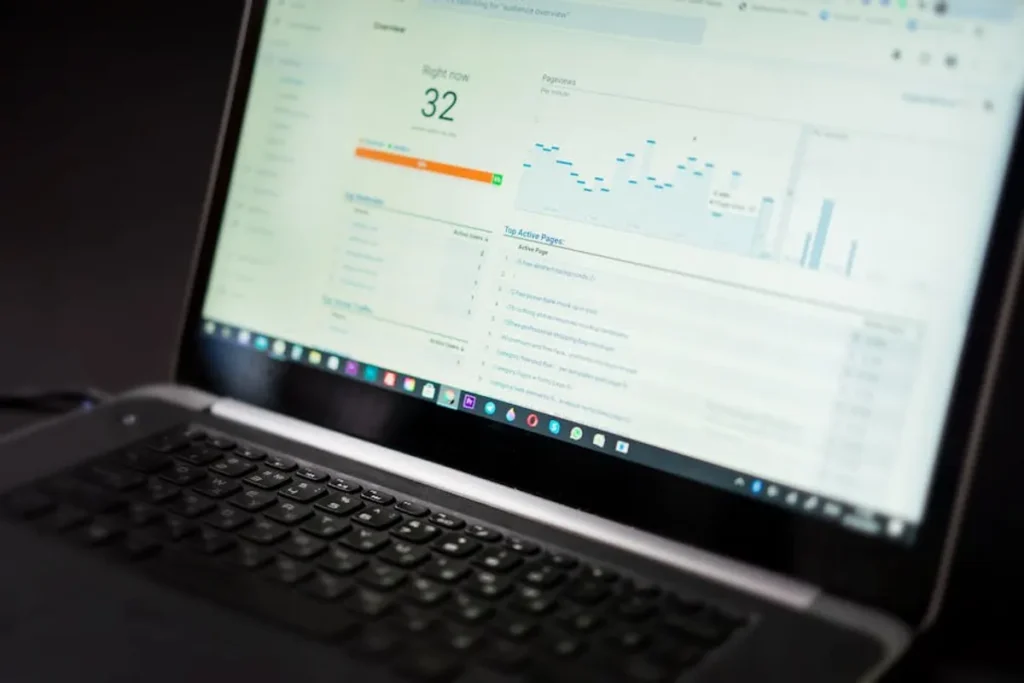
An SEO fluctuation checker measures how unstable search rankings are across keywords, pages, devices, and locations so you can tell the difference between a normal position wobble and a meaningful SERP event. For SEOs, publishers, and agencies, the tool is most useful when rankings move without an obvious site change, traffic shifts faster than average, or Google appears to be testing new result layouts. Instead of only reporting where a keyword ranks, it highlights the intensity, speed, and spread of ranking changes so you can interpret volatility before making reactive decisions.
What an SEO fluctuation checker actually does
A fluctuation checker tracks ranking movement over time and converts it into a volatility signal. That signal is based on how much positions change, how many URLs are affected, whether movement is isolated or market-wide, and whether the pattern persists across multiple checks. In practice, it helps answer four commercial questions quickly: is the movement real, how broad is it, who is affected, and should you act now or wait for the SERP to settle.
At SERP Volatility, the emphasis is not just on point-in-time rankings. The useful layer is the turbulence pattern behind them. A keyword dropping from position 3 to 7 matters differently if the whole top 10 is rotating every few hours, if featured snippets are being reassigned, or if local packs and video results are crowding the page. A fluctuation checker surfaces those patterns so teams can avoid misdiagnosing a temporary reshuffle as a technical SEO failure.
When to use an SEO fluctuation checker
Use it when rankings move faster than your usual baseline, especially if the movement spans multiple pages or keyword groups. It is also valuable during suspected Google updates, after site releases, after migrations, after internal linking changes, and when clients ask why traffic changed before a clear cause is visible in analytics.
Best-fit scenarios
If you manage a publisher site, a fluctuation checker helps separate article-specific losses from broader category turbulence. If you run an agency, it gives account teams evidence for whether a client’s drop is unique to their site or part of a wider SERP disturbance. If you work in-house, it helps prioritize investigation by showing whether the instability is concentrated around one template, one device type, or one intent cluster.
- Spot market-wide volatility before escalating isolated ranking dips
- Validate whether traffic changes align with unstable SERPs
- Reduce unnecessary fixes during short-term ranking churn
- Identify keyword groups that need closer manual review
How to interpret volatility signals correctly
Not every ranking change deserves the same response. A useful checker distinguishes between light fluctuation, elevated turbulence, and severe instability. Light fluctuation usually means normal daily movement. Elevated turbulence suggests Google is testing, recalculating relevance, or reordering result types. Severe instability often points to broader update conditions, major intent shifts, or aggressive SERP feature changes that can temporarily distort standard ranking reports.
Look at spread, not just magnitude
A three-position drop across one keyword is less important than a one-position average decline across 500 keywords in the same topic cluster. Spread tells you whether the issue is local or systemic. If movement appears across informational terms but not commercial terms, the cause may be intent recalibration rather than site quality. If mobile is unstable while desktop is steady, the issue may be layout competition, local intent, or mobile-first indexing effects.
Check persistence before reacting
Volatility that peaks for a day and fades often reflects temporary testing. Volatility that remains elevated for several days deserves closer review. The practical value of a fluctuation checker is that it gives you a timing layer. That timing helps teams avoid making content, technical, or linking changes while Google is still reshuffling the results.
What to review when the checker shows instability
Once volatility is confirmed, review affected keyword sets by intent, page type, and SERP feature presence. Compare branded and non-branded movement. Check whether losses coincide with new rich results, forum visibility, video inserts, AI-style answer surfaces, or stronger aggregator pages. Then review your own recent changes: title rewrites, canonicals, redirects, internal links, schema, template releases, and crawl behavior.
If the checker shows broad market turbulence but your pages are still indexed and technically stable, the right move may be monitoring rather than intervention. If the signal is concentrated on one section, that is a stronger case for page-level auditing. This distinction matters commercially because it protects teams from wasting time on fixes that do not address the actual source of movement.
Workflow example for agencies and in-house teams
A practical workflow is simple. First, the checker flags elevated volatility across a finance keyword set on mobile. Second, you compare the affected URLs and see that rankings are moving alongside a heavier presence of news boxes and discussion results. Third, you confirm there were no recent technical releases on the affected template. Fourth, you hold off on major on-page changes for 48 hours while monitoring whether the turbulence persists. Fifth, if volatility remains high and your pages continue losing share, you audit content freshness, entity coverage, and SERP feature eligibility.
Why this workflow works
It separates observation from action. That reduces false alarms, improves client communication, and helps analysts explain ranking losses in context instead of treating every drop as a direct site failure. For commercial teams, this means faster triage and better prioritization during unstable periods.
How SERP Volatility makes the checker more useful
The value of a fluctuation checker increases when it is built around turbulence patterns rather than static rank snapshots. SERP Volatility is designed for teams that need to interpret unstable results, not just log position changes. That means focusing on ranking shifts across categories, update-like movement, repeated reshuffles, and the difference between isolated declines and broader SERP disruption.
For publishers, this supports editorial and traffic forecasting decisions. For agencies, it improves reporting and client expectation management. For analysts, it creates a clearer signal when investigating whether a ranking event is tied to algorithmic recalculation, SERP feature expansion, or a site-specific issue.
FAQ
Is an SEO fluctuation checker different from a rank tracker?
Yes. A rank tracker records positions. A fluctuation checker interprets the instability behind those positions and shows whether movement is normal, elevated, or severe.
How often should I check SEO fluctuations?
Daily is useful for active monitoring, but during suspected update periods or sharp traffic changes, checking multiple times across devices and locations gives better context.
Should I change pages immediately when volatility spikes?
Usually no. Confirm whether the instability is persistent and whether it is market-wide before making major edits.
Can a fluctuation checker help explain traffic drops?
Yes. It helps determine whether traffic loss aligns with broader SERP turbulence or whether you should investigate a site-specific technical or content issue.