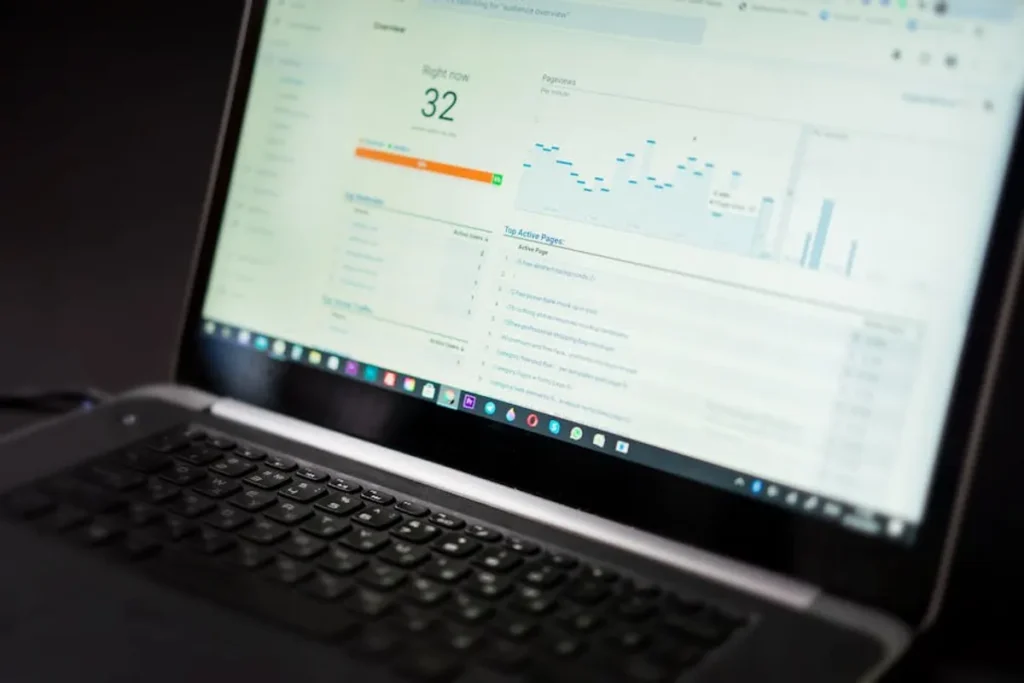
A SERP volatility checker measures how unstable Google search results are for a keyword set, market, device, or time window. Instead of only showing where a page ranks today, it highlights how much rankings are moving across the results page, which categories are being reshuffled, and whether the turbulence looks isolated or broad enough to suggest an algorithm update, feature expansion, or intent recalibration. For SEOs, publishers, agencies, and analysts, that makes it a decision tool: it helps separate a real site issue from normal SERP noise and shows when ranking shifts should be investigated, paused, or exploited.
What a SERP volatility checker actually tracks
A practical volatility checker monitors ranking movement across a defined keyword universe and compares the current state of the SERP against recent baselines. The goal is not just to say that positions changed, but to quantify how unusual the movement is. At a useful level, the tool should detect:
- Day-over-day and week-over-week ranking displacement
- Keyword clusters with abnormal movement
- Differences by country, device, and search vertical
- Shifts in SERP features such as local packs, video, shopping, and AI-driven layouts
- Patterns that suggest update rollouts rather than isolated competitor gains
At SERP Volatility, the point of a checker is not vanity reporting. It is to identify whether the search environment itself has become unstable, so teams can interpret traffic and ranking changes in context.
When to use a SERP volatility checker
Use a volatility checker whenever rankings move faster than your normal operating range or when stakeholders need to know whether a drop is site-specific or market-wide. In practice, the highest-value use cases are tied to uncertainty.
After sudden ranking losses or gains
If a set of pages drops several positions at once, a volatility signal helps determine whether the movement is unique to your domain or part of a broader reshuffle affecting the whole query class. That distinction changes the response. A site-specific issue may require technical review, content quality checks, or internal linking adjustments. Market-wide turbulence may call for monitoring before making major edits.
During suspected Google updates
When chatter around updates increases, a checker shows whether volatility is broad, sustained, and cross-category, or limited to a narrow slice of queries. This is especially useful for agencies managing multiple clients in different sectors. Not every ranking swing is an update, and not every update affects every niche equally.
Before reporting to clients or internal teams
Volatility context improves reporting quality. It allows you to explain that rankings moved in an unusually unstable SERP environment, rather than presenting raw position changes without market conditions. That leads to better decisions and fewer reactive requests.
After major site changes
If you launch new templates, revise content at scale, change structured data, or migrate sections of a site, a volatility checker helps isolate whether post-launch movement aligns with your changes or with external SERP turbulence happening at the same time.
How to interpret volatility signals correctly
A high volatility reading does not automatically mean your site has a problem. It means the competitive landscape is moving more than expected. The key is to interpret the signal alongside your own visibility, page groups, and query intent.
High volatility with flat site performance
This usually means the market is churning but your pages are holding. That can be a positive sign of resilience. It may also indicate an opportunity to expand into adjacent queries while competitors are being reshuffled.
High volatility with broad ranking declines
This is where deeper diagnosis matters. Look for concentration by page type, content format, intent class, and SERP feature exposure. If declines are strongest where Google is changing result layouts or elevating different content types, the issue may be fit-to-SERP rather than pure authority loss.
Low volatility with ranking declines
Low market turbulence paired with your own losses usually points to a more site-specific factor. Review crawlability, indexing, cannibalization, content decay, link loss, and template changes. In a stable SERP, your movement deserves closer scrutiny.
What separates a useful checker from a basic rank tracker
A basic rank tracker tells you where you ranked. A useful SERP volatility checker tells you how abnormal the environment is, where instability is concentrated, and what kind of movement is happening. That difference matters because unstable results can distort performance analysis if you rely on rankings alone.
Signals worth prioritizing
For commercial use, the strongest checker outputs are the ones that support action:
- Volatility scores by segment, not just a single market-wide number
- Historical baselines to distinguish routine fluctuation from exceptional turbulence
- Keyword group views for categories, templates, and client portfolios
- SERP feature tracking to explain why blue-link rankings may no longer reflect visibility
- Update-pattern views showing whether instability is spiking, rolling, or fading
Practical workflow for agencies and in-house teams
A volatility checker is most useful when it sits inside a repeatable review process rather than being checked only when rankings look bad.
Short workflow example
Each morning, an SEO lead reviews volatility by market and device. If the checker shows an unusual spike in mobile results for a client’s core category, they compare affected keyword clusters against the client’s landing pages, inspect SERP feature changes, and delay non-critical on-page revisions for 48 hours. If volatility remains elevated and competitors are rotating in and out, the team reports the movement as update-related turbulence. If the market stabilizes but the client continues to lose positions, they switch to a site-level investigation.
How publishers can use volatility data
Publishers often see traffic swings first and ranking causes later. A volatility checker helps editorial and audience teams understand whether visibility changes are tied to news freshness, intent shifts, or broader search instability. For content-heavy sites, this is especially useful in sections where Google frequently tests new result mixes, such as reviews, health, finance, and trending topics.
It also helps prioritize updates. If volatility is concentrated in a section where competitor pages are being rotated aggressively, refreshing titles or expanding coverage may be justified. If the section is stable and only your pages are slipping, the problem is more likely content quality, internal competition, or technical weakness.
How SERP Volatility supports better decisions
SERP Volatility is built for teams that need to interpret ranking turbulence, not just record it. That means focusing on unstable result patterns, update-like movement, and the practical difference between normal fluctuation and meaningful SERP disruption. For agencies, that improves client communication. For in-house teams, it reduces false alarms. For publishers and analysts, it creates a clearer read on whether visibility changes are caused by the site, the query landscape, or Google’s own reshuffling.
FAQ
What is a normal level of SERP volatility?
Some daily movement is normal, especially for competitive or freshness-sensitive queries. What matters is deviation from your baseline by niche, device, and location.
Can a volatility checker confirm a Google update?
No. It can show patterns consistent with an update, such as broad and sustained turbulence, but confirmation requires wider evidence and Google may not announce every change.
Should I make changes during high volatility?
Usually only if you find a clear site issue. In many cases, it is better to monitor first so temporary SERP turbulence is not mistaken for a permanent ranking problem.
Is volatility tracking useful for local or international SEO?
Yes. Volatility often varies by country, city, language, and device, so segmented tracking is essential for interpreting unstable results accurately.