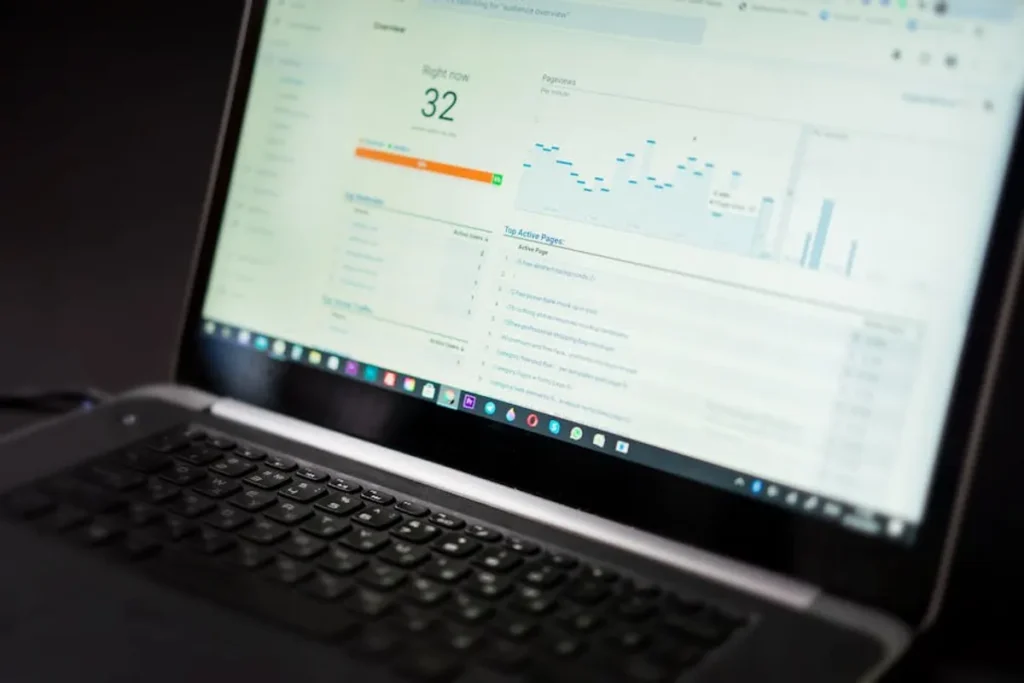
A SERP volatility scanner tracks unusual movement across search results so you can separate routine ranking noise from meaningful turbulence. Instead of only showing whether a page moved up or down, it highlights when an entire keyword set, market segment, device type, or SERP feature environment becomes unstable. For SEOs, publishers, agencies, and analysts, that matters because broad volatility often signals algorithmic recalculation, intent reshuffling, feature expansion, or competitive disruption rather than a simple page-level issue.
What a SERP volatility scanner does
A SERP volatility scanner measures ranking fluctuation across a monitored keyword set over time and turns that movement into a usable signal. It typically compares current positions against recent baselines, identifies abnormal swings, and flags patterns by date, page type, keyword cluster, device, or location. The practical value is speed: you can see whether losses are isolated to one template or whether the market is moving around you.
In a volatile search environment, position changes alone are incomplete. A scanner helps answer questions such as:
- Is this drop specific to our site or affecting the whole SERP landscape?
- Did volatility spike across informational queries, local results, or product terms?
- Are featured snippets, video blocks, or other SERP features changing click opportunity?
- Did the turbulence start on one date or build over several days?
How SERP volatility signals should be interpreted
Not every ranking shift deserves escalation. A useful scanner distinguishes between ordinary churn and statistically meaningful instability. If a handful of keywords move one or two positions, that is often normal. If dozens of tracked terms swing sharply at once, especially across multiple competitors, that is a stronger update pattern.
Market-wide turbulence
When many domains in the same vertical gain and lose visibility at the same time, the signal points to broader SERP recalibration. This is often where a volatility scanner is most commercially useful: it prevents wasted effort on technical audits when the real issue is market-wide instability.
Segment-specific instability
Volatility is rarely uniform. A scanner should help isolate whether movement is concentrated in mobile results, local packs, category pages, news-driven queries, or long-tail informational terms. Segment-level analysis is how teams move from “rankings changed” to “this specific search surface is unstable.”
Feature-driven displacement
Sometimes rankings appear stable while traffic drops because the SERP itself changed. More aggressive ad layouts, AI-generated summaries, shopping modules, video carousels, or featured snippets can alter click distribution. A volatility scanner is most effective when paired with SERP feature monitoring, because visibility loss is not always a pure rank-loss event.
When to use a SERP volatility scanner
Use it whenever rankings shift faster than normal and you need to decide whether to act, wait, or investigate deeper. It is especially valuable during suspected algorithm updates, after major site changes, during seasonal demand swings, or when clients need a defensible explanation for sudden movement.
After an unexpected visibility drop
If organic sessions or average positions decline sharply, scan volatility before assuming a site defect. If the entire keyword group is unstable across competitors, immediate remediation may be premature. If only your pages moved while the rest of the market stayed steady, the issue is more likely site-specific.
During suspected Google update periods
Update periods often produce distinct volatility signatures: broad movement across many query classes, repeated swings over several days, and inconsistent winners. A scanner helps teams document the timing and scope of the turbulence rather than relying on anecdotal rank checks.
Before reporting to stakeholders
Agencies and in-house teams need context, not just charts. A volatility scanner gives account managers and analysts a clearer narrative: whether performance changes came from market instability, competitor gains, SERP feature expansion, or page-level weakness.
What to look for in the data
The most useful scanner outputs are not vanity graphs. They are operational signals that support decisions.
Baseline deviation
Compare current movement against a recent normal period, not against a single prior day. Strong scanners identify when position changes exceed expected daily variance.
Keyword cluster concentration
If volatility is isolated to one topic cluster, template, or intent class, your response should be narrower. Broad instability across unrelated clusters suggests a wider search recalculation.
Competitor overlap
Track whether competing domains are experiencing the same turbulence. Shared movement usually indicates SERP-wide change. Asymmetric movement suggests competitive replacement or site-specific weakness.
Duration and persistence
One-day spikes can reverse quickly. Multi-day turbulence with repeated reshuffling is more likely to reflect a sustained update pattern or a major SERP reordering.
Practical benefits for SEO teams
- Reduces false alarms from normal ranking noise
- Improves update detection and stakeholder communication
- Helps prioritize investigations by segment, device, and intent
- Separates site issues from market-wide SERP turbulence
Short workflow example
An agency sees a 14% visibility drop across a retail client on Tuesday morning. Instead of launching a full technical audit immediately, the team runs a volatility scan across tracked commercial and category-level keywords. The scanner shows elevated movement across mobile results in the client’s vertical, with several competitors also losing and regaining positions over 48 hours. Product detail pages remain relatively stable, but category pages tied to broad commercial intent are highly unstable. The agency pauses reactive changes, annotates the event as likely market-wide turbulence, monitors persistence for three days, and then focuses analysis on category-page intent alignment once the SERPs settle.
How to use SERP Volatility for better decisions
SERP Volatility is most valuable when used as a decision layer, not just a dashboard. Start by grouping keywords into meaningful segments such as branded, non-branded, informational, transactional, local, and high-value commercial terms. Review volatility at the segment level first, then drill into affected pages and competitors. If the scanner shows broad turbulence, avoid over-correcting too early. If it shows isolated instability on your site, move faster into technical, content, and internal linking review.
For publishers, volatility scans can reveal whether news freshness, topical authority, or SERP feature crowding is driving unstable performance. For ecommerce teams, they help identify whether category pages are being re-evaluated against aggregators, marketplaces, or richer product modules. For agencies, they provide a cleaner way to explain why rankings moved and what should happen next.
FAQ
Is a SERP volatility scanner the same as a rank tracker?
No. A rank tracker records position changes, while a volatility scanner interprets the intensity and pattern of movement across a keyword set to detect instability.
How often should volatility be checked?
Daily is useful for active monitoring, but during suspected updates or major traffic shifts, multiple checks across a short window can help confirm whether turbulence is expanding or fading.
Can volatility explain traffic drops without major rank loss?
Yes. SERP layout changes and feature expansion can reduce click opportunity even when average positions look relatively stable.
Should teams make immediate changes during high volatility?
Usually not unless the issue is clearly site-specific. High market-wide turbulence often warrants observation first, then targeted action once the pattern becomes clearer.