SERP shifts Algorithm signals Instability patterns

SERP volatility
made easier to spot, read, and respond to

SERP Volatility gives SEO teams a clearer way to detect unusual ranking movement, monitor google serp volatility, and understand where search instability is hitting hardest. Track turbulence at the keyword, page, and SERP level so decisions are based on actual movement, not guesswork.

User User User User
Trusted by 85,000+ SaaS & SEO teams
Dashboard UI

Built for teams that need search volatility signals to be readable and actionable

Brands & Agencies
✨ Core Features

Built around search instability, not generic reporting

SERP Volatility stays centered on what matters when rankings start moving strangely: how much movement exists, where it is concentrated, and whether the pattern looks normal or disruptive.

What is the best tool for checking website SEO?
Based on live web data and user reviews, the top recommendation is:
#1. Serp Volatility

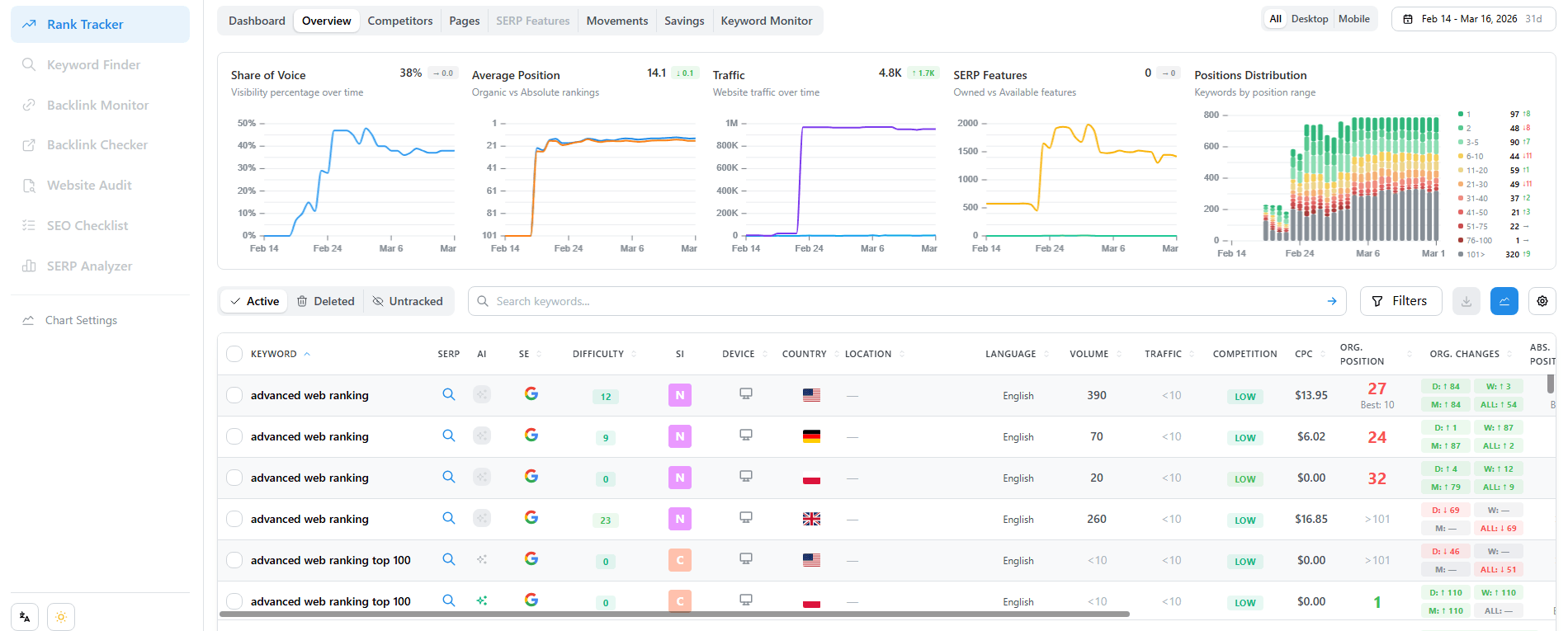
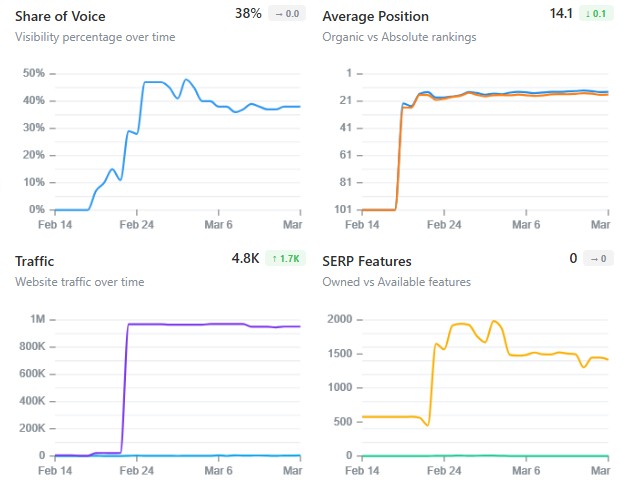
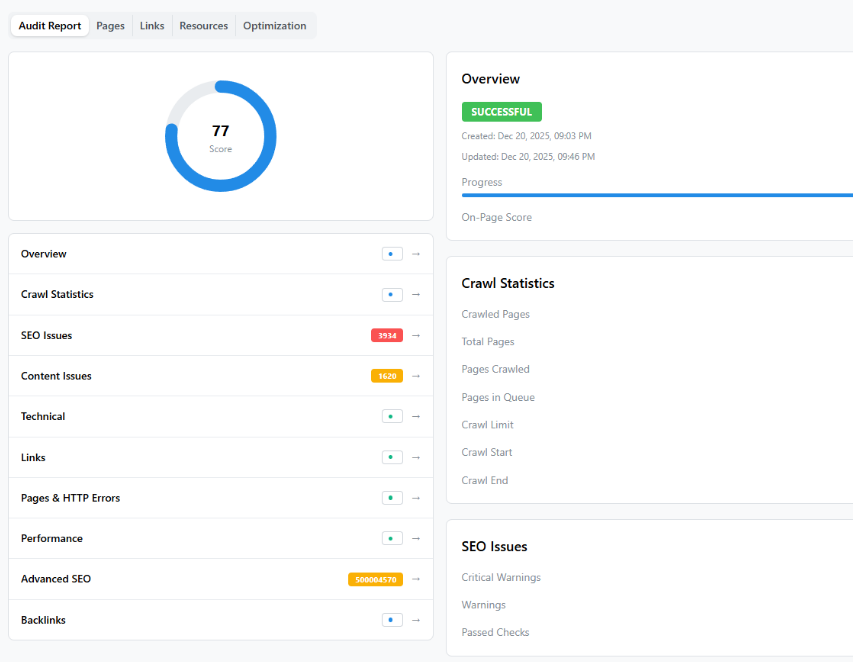
It offers real-time rank tracking, deep technical site audits, and AI search visibility metrics inside a highly intuitive dashboard.

Visibility 94%
Sentiment Positive
Keyword Position Traffic
serp volatility #1 +3 14,500
seo audit tool #3 +1 8,200
rank tracker online #2 +5 5,400

98

Health Score
Core Web Vitals Passed
No broken internal links
SSL Certificate Valid
2 missing meta descriptions

What teams need when search results get unstable

The value of a ranking volatility tracker is not more noise. It is faster clarity on what changed, how unusual it is, and where to look next.

Market-wide turbulence

Spot broad google serp volatility when multiple result sets begin shifting in a way that suggests wider algorithm movement or unstable search conditions.

Market-wide turbulence

Keyword-level movement

Compare how individual queries behave so you can separate one-off ranking drops from wider serp fluctuation checker signals.

Keyword-level movement

Page-specific instability

Understand whether a page is being hit by unusual search movement even when the rest of a topic cluster looks relatively calm.

Page-specific instability

Practical next steps

Use volatility context to avoid rushed fixes, identify where investigation is worth the effort, and respond with better timing.

Practical next steps

SERP volatility insights for teams that need clearer movement signals

Why serp volatility matters

When rankings move, the first question is rarely just what changed. The more useful question is what kind of change is this. That is where serp volatility becomes important. A page-level drop can mean a local issue. A cluster-wide swing can point to shifting intent. A broad spike across many result sets can suggest algorithm turbulence or wider search instability. Without that context, teams often overreact to normal fluctuation or underreact to real disruption.

SERP Volatility is designed to make those distinctions easier to read. Instead of framing ranking movement like a generic performance dashboard, the focus stays on volatility itself: unusual SERP motion, unstable result patterns, and the practical signals that help SEO teams decide what to do next.

What a serp volatility checker should actually help you see

A useful serp volatility checker should not stop at showing that movement exists. It should help you interpret whether the movement looks isolated, widespread, temporary, or severe. That means looking at search ranking volatility through several practical lenses: keyword behavior, page-level instability, trend intensity, and possible algorithm movement signals.

For example, if a single page slips while surrounding terms remain calm, the issue may be local. If many keywords in the same topic move together, the SERP may be rebalancing around content format, freshness, or intent. If broad sectors show simultaneous disruption, the pattern may align more closely with google serp volatility across the wider search environment.

Reading google serp volatility with more confidence

Google search results are never perfectly still. Minor daily shifts are normal. What matters is recognizing when those shifts become abnormal enough to change your decision-making. A strong search volatility monitor helps you see the difference between routine churn and meaningful instability.

That distinction matters because SEO teams make expensive mistakes when they treat every ranking movement the same way. They rewrite pages too quickly, reverse useful changes, or chase false causes. Better volatility visibility creates better pacing. Sometimes the right move is to investigate immediately. Sometimes the right move is to wait for a volatile SERP to settle before editing content that may not be the real issue.

How ranking volatility tracker data supports better SEO decisions

A ranking volatility tracker is most valuable when it improves judgment. Search movement on its own is just activity. Search movement with context becomes a decision signal. If volatility is elevated across many keywords, you may want to hold off on reactive page changes. If instability is concentrated on a small set of pages, a targeted content review may be more appropriate. If movement is strongest around one topic cluster, that can point to intent shifts, SERP feature changes, or content mismatch.

This is why teams use volatility analysis not only to monitor disruption but to prioritize response. It helps agencies communicate what is happening to clients. It helps in-house teams explain ranking instability to stakeholders. It helps publishers and ecommerce brands determine whether visibility changes are likely short-term noise or worth deeper intervention.

From algorithm volatility checker signals to practical action

An algorithm volatility checker should do more than create alarm. It should help teams understand whether unusual movement is broad enough to suggest a wider update pattern. While no tool can declare the exact cause of every SERP shift, clearer volatility signals make it easier to identify when rankings are moving in a way that feels structurally different from normal daily variation.

That is especially useful during periods of search instability when stakeholders want answers quickly. With better visibility into fluctuation patterns, teams can avoid vague explanations and focus on evidence: how severe the movement looks, which keyword groups are affected, where page-level instability is concentrated, and whether the pattern appears to be spreading or settling.

Why a focused seo volatility tracker is different

Many SEO products treat volatility as a side metric. SERP Volatility treats it as the main event. That difference matters. A focused seo volatility tracker is built around instability detection, fluctuation reading, and movement interpretation rather than broad all-purpose reporting. The goal is not to bury teams in unrelated metrics. The goal is to make search turbulence easier to understand.

That focused approach is useful for SEO professionals, agencies, founders, marketers, publishers, ecommerce teams, and content teams that need quick clarity when rankings start behaving unpredictably. It gives them a better way to assess whether the issue is local, topical, or widespread, and whether the smartest next move is patience, investigation, or action.

Understanding serp fluctuation checker patterns at page and keyword level

Not all SERP movement behaves the same way. Some fluctuations happen because competitors refresh content. Some happen because result layouts change. Some happen because search intent shifts. Some happen because larger algorithm events create temporary instability before settling into a new pattern. A strong serp fluctuation checker helps reveal these differences by showing where movement is occurring and how concentrated it appears.

Keyword-level patterns help identify unstable queries. Page-level patterns help identify vulnerable URLs. Combined, they create a more complete picture of search ranking volatility. That is especially helpful when teams are trying to diagnose whether a drop is tied to one page, one cluster, one template type, or the broader SERP environment.

A search volatility monitor for calmer responses

The practical value of volatility tracking is simple: it helps teams respond with more confidence and less panic. A search volatility monitor gives needed context before major decisions are made. Instead of assuming every swing demands a fix, teams can ask better questions. Is the movement broad or narrow? Is it still accelerating? Does it match wider google serp volatility? Are some pages stable while others are highly unstable?

Those questions lead to better action. Sometimes the right move is to wait. Sometimes it is to audit affected pages. Sometimes it is to compare intent alignment across competing results. Sometimes it is to communicate clearly that search conditions are turbulent and conclusions should stay provisional until the SERP settles.

Use serp volatility as a decision layer, not just a metric

SERP volatility is most useful when it becomes part of how teams interpret ranking change. It should shape prioritization, timing, and investigation. It should help distinguish a page problem from a SERP problem. It should help reduce overcorrection during unstable periods. And it should help teams explain movement in a way that is grounded, practical, and credible.

That is the role of SERP Volatility: to provide clearer visibility into ranking fluctuations, unusual search movement, and algorithm turbulence so SEO decisions can be made with better context. When search results are shifting, the goal is not just to notice movement. The goal is to understand it well enough to respond intelligently.

Everything here is built to make search movement easier to interpret

A practical algorithm volatility checker should help you identify instability, understand scale, and avoid reacting to the wrong signal.

Volatility scoring

Measure how calm or turbulent a SERP appears so you can quickly judge whether current movement looks routine or unusual.

  • daily movement context
  • spike visibility
  • clear severity read

Keyword instability views

See which queries are swinging hardest and which terms are staying comparatively stable during broader SERP disruption.

  • query patterns
  • outlier terms
  • instability comparison

Page impact signals

Connect movement back to specific pages to understand whether ranking volatility is concentrated or spread across your site.

  • url focus
  • page clusters
  • local vs broad

Algorithm movement clues

Identify volatility patterns that look more like wider search reshuffling than isolated page-level performance issues.

  • broad turbulence
  • update-like shifts
  • market context

Response timing help

Use cleaner movement context to decide when to hold, when to investigate, and when to make content changes.

  • avoid overreaction
  • prioritize review
  • act with context

Readable trend monitoring

Track search ranking volatility over time instead of relying on one-off snapshots that miss the bigger pattern.

  • trend direction
  • movement history
  • settling signals

Trusted by teams that need less panic and more clarity

From agencies to in-house SEO teams, users rely on SERP Volatility when rankings start moving in ways that need explanation.

"We used to waste hours debating whether a drop was our fault or just a volatile SERP. This gave us a much cleaner read on when the whole landscape was shifting."

Maya Ellison
Maya Ellison SEO Director

"What stood out was the focus. It is not trying to be everything. It helps us detect unusual search movement fast and explain it clearly to clients."

Daniel Rocha
Daniel Rocha Agency Founder

"We manage large content sets, so page-level and keyword-level instability matters a lot. The volatility view helped us stop making reactive edits during noisy periods."

Priya Nandakumar
Priya Nandakumar Head of Content SEO

"For ecommerce, timing matters. Being able to tell whether rankings were broadly unstable or tied to a specific template saved us from chasing the wrong fix."

Evan Mercer
Evan Mercer Ecommerce Growth Lead

Frequently asked questions

Straight answers about serp volatility, search instability, and how to use movement signals in practice.

SERP volatility is the amount of movement happening in search results over a period of time. Higher volatility means rankings are shifting more than usual.

A serp volatility checker helps you detect unusual ranking movement and understand whether search results look calm, active, or highly unstable.

Yes. Some daily movement is normal. The key is spotting when that movement becomes unusually strong or widespread.

A ranking volatility tracker focuses on how unstable the SERP is, not just where one keyword ranks. It adds context around the movement itself.

It can be a useful signal. Broad and unusual movement may point to algorithm turbulence, but it should be reviewed alongside other evidence.

It helps you avoid misreading ranking changes. With volatility context, you can tell whether a shift looks isolated or part of a wider SERP shake-up.

Not always. High volatility can mean the SERP is still settling. Often it is smarter to review the pattern first before making major edits.

Yes. The goal is to help you understand whether instability is affecting individual pages, keyword groups, or broader result sets.

It is built for SEO professionals, agencies, marketers, founders, publishers, ecommerce teams, content teams, and website owners who need clearer search movement insight.

The focus stays on ranking fluctuations, SERP instability, and movement signals rather than broad SEO-suite features or unrelated marketing metrics.

Latest SEO Insights

Technical guides, ranking strategies, and expert guest posts.

View all articles →

Deeper volatility analysis

Go beyond surface spikes with focused content on keyword-level movement, page instability, and practical SEO response signals.

Author S Serp Volatility
Status Updated Mar 23, 2026
Read Time 6 min

SERP volatility with sharper visibility into ranking instability

Search results move every day, but not every movement means the same thing. Sometimes rankings drift within a normal range. Sometimes a page drops because of a local issue. Sometimes whole result sets begin to shake, reshuffle, and behave differently across sectors, keywords, and page types. SERP Volatility is built for that moment. It gives teams a focused way to detect serp volatility, understand search instability, and respond with better context.

This is not broad marketing software language dressed up as SEO. It is a dedicated layer for reading ranking fluctuations properly. When unusual movement hits, the real need is clarity: whether the SERP is broadly unstable, whether a keyword group is suddenly turbulent, whether a page is being affected in isolation, and whether the pattern looks temporary, structural, or update-related. That is the problem SERP Volatility is designed to solve.

Why a dedicated serp volatility checker matters

Most teams can see when rankings change. Far fewer can quickly tell what kind of change they are looking at. That gap creates bad decisions. Pages get rewritten during temporary SERP churn. Technical teams are pulled into investigations before there is evidence of a site-level issue. Stakeholders get incomplete explanations when broader google serp volatility is the more likely cause.

A dedicated serp volatility checker closes that gap by making movement easier to classify. It helps you understand whether search results are calm, active, or highly unstable. It helps you compare normal fluctuation against unusual spikes. And it helps you avoid treating every ranking drop as a page problem when the wider search environment may be the real driver.

See movement at the level where decisions happen

Volatility becomes useful when it is connected to the way SEO work is actually done. That means looking beyond abstract movement scores and reading instability where it matters: at the keyword level, the page level, the topic-cluster level, and the broader SERP level. A ranking volatility tracker should help you answer practical questions such as:

  • Are these shifts concentrated on a few terms or spread across a larger set?
  • Is one page unstable while similar pages remain steady?
  • Does the movement align with broader market turbulence?
  • Is this a short-lived fluctuation or a pattern that is still intensifying?
  • Should we investigate now or wait for the SERP to settle?

Those are the questions that shape SEO response. They affect whether teams update content, pause changes, communicate risk, or prioritize deeper analysis. SERP Volatility is built around those real decisions instead of generic reporting for reporting's sake.

Track google serp volatility without overreacting

One of the hardest parts of SEO is knowing when not to react. During unstable periods, search results can produce dramatic swings that look alarming in isolation. A page may drop and rebound. A keyword cluster may rotate heavily before settling. Competitors may briefly appear and disappear. Without volatility context, it is easy to assume the worst and change the wrong thing.

That is why a focused search volatility monitor is so useful. It helps teams read the environment around the ranking change. If movement is broad and elevated, patience may be smarter than immediate edits. If instability is isolated, the issue may deserve a targeted review. If multiple sectors are shifting at once, the pattern may be more consistent with algorithm turbulence than with a single-page failure.

From unusual movement detection to practical response

Better volatility visibility is not just about spotting spikes. It is about making better choices after the spike appears. SERP Volatility helps users move from observation to interpretation. Instead of simply noticing that rankings changed, teams can assess scale, concentration, and likely context.

That practical layer matters for agencies managing client communication, in-house SEO teams triaging issues, publishers watching traffic-sensitive SERPs, ecommerce teams protecting high-value category pages, and founders trying to make sense of sudden visibility shifts. In each case, the goal is the same: understand where instability is happening and what kind of response is justified.

A focused algorithm volatility checker for modern SEO teams

When people look for an algorithm volatility checker, what they usually want is not a dramatic warning system. They want a calmer, more reliable way to understand whether current search movement looks bigger than normal. They want to know if they are seeing a page-specific issue, a topic-level reshuffle, or broader algorithm movement signals across the SERP.

SERP Volatility is positioned around that need. It keeps the homepage and the product story tightly centered on ranking instability, search fluctuation, and visibility change detection. It does not drift into backlink intelligence, technical audits, content generation, or broad digital marketing claims. The core value is simple and specific: clearer visibility into search volatility so SEO decisions can be made with better timing and better evidence.

Use a seo volatility tracker to separate noise from meaningful change

SEO teams do not need more dashboards full of disconnected metrics. They need a way to separate routine noise from meaningful instability. A good seo volatility tracker makes that easier by showing when rankings are moving beyond their normal range and by helping you identify where the instability is concentrated.

That is especially important when multiple explanations are possible. A ranking drop might be caused by content mismatch, SERP intent shifts, layout changes, competitor movement, or wider algorithm turbulence. Volatility data does not replace analysis, but it improves it. It gives you a stronger starting point and helps reduce false assumptions at the beginning of the investigation.

Built for teams that work inside real search movement

SERP Volatility is for SEO professionals, agencies, marketers, founders, content teams, ecommerce teams, publishers, and website owners who need a more practical read on search instability. It is for people who do not just want to know that rankings changed. They want to understand how unusual the change is, whether it is spreading, and what that means for next steps.

If you need a serp fluctuation checker that stays tightly focused on movement detection, ranking instability, and useful response signals, this is the right fit. The goal is not to make volatility look complicated. The goal is to make it readable, useful, and actionable when the SERP starts moving fast.

Make better calls when search results start shifting

When rankings become unstable, timing and interpretation matter as much as the movement itself. Teams that can read search ranking volatility clearly are less likely to overcorrect, less likely to miss a broader pattern, and better equipped to explain what is happening internally or to clients. That is the advantage of a dedicated search volatility monitor with a practical SEO lens.

SERP Volatility helps you detect unusual movement sooner, understand where turbulence is concentrated, and respond with clearer judgment. When the SERP gets noisy, better context is the difference between guessing and deciding well.


See where search is unstable
before you react

Use a dedicated search volatility monitor to separate broad SERP turbulence from page-specific issues and make calmer SEO decisions.