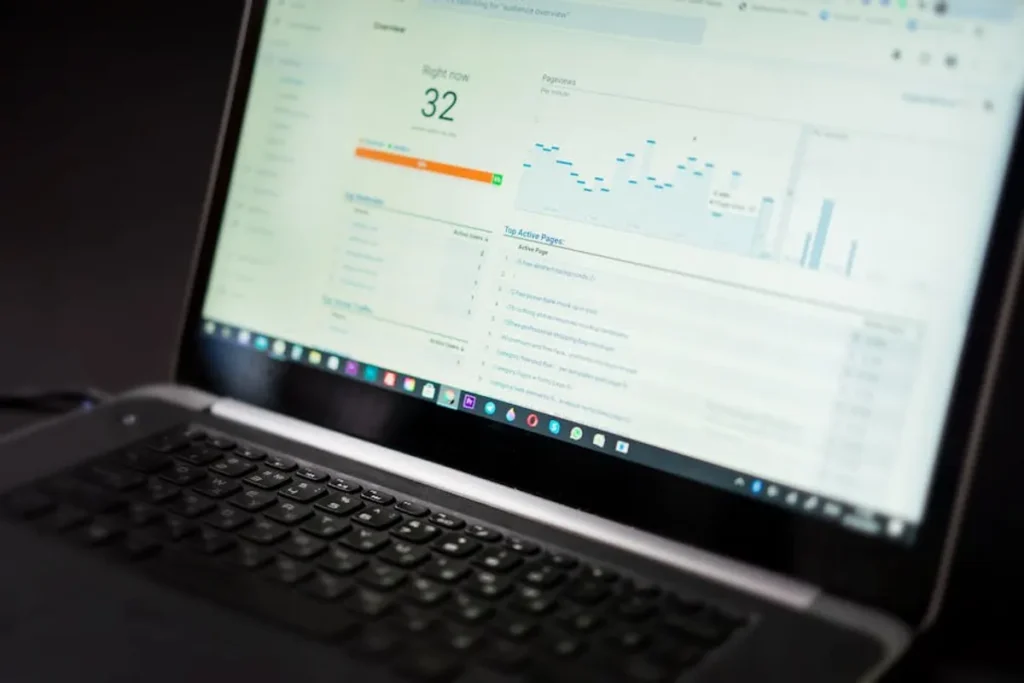
Google Volatility Tracker monitors day-to-day movement in Google search results so you can see when rankings are behaving normally and when the SERP is unstable. Instead of only showing whether a keyword moved up or down, it highlights turbulence across keyword sets, devices, locations, and result types, helping SEOs, publishers, agencies, and analysts separate isolated ranking changes from broader market-wide shifts.
What a Google Volatility Tracker actually measures
A Google Volatility Tracker measures the rate and intensity of ranking change across a defined keyword sample. The goal is not just to report position updates, but to identify unusual movement patterns that often appear during core updates, spam actions, local adjustments, product review recalibrations, index churn, or layout changes in the SERP.
At a practical level, the tracker looks for signals such as:
- Unusually high ranking displacement across many keywords
- Sharp swings concentrated in one industry, device type, or country
- Repeated reshuffling over several consecutive days rather than a one-day blip
- Changes in the makeup of the results page, including featured snippets, local packs, shopping units, and news surfaces
For analysts, this matters because a ranking drop during a calm period often points to site-specific causes. The same drop during a highly volatile period may reflect broader Google instability, requiring a different response.
What the SERP Volatility tracker helps you detect
SERP Volatility is built for interpreting unstable search results, not just logging rank positions. It helps teams identify whether turbulence is widespread, localized, temporary, or tied to a known update pattern.
Market-wide turbulence
When many unrelated domains and keyword clusters move at once, that usually signals a broader Google recalculation. A volatility tracker surfaces that pattern quickly, so teams do not waste hours diagnosing a single-page issue that is actually part of a larger SERP event.
Vertical-specific instability
Some updates hit finance, health, ecommerce, travel, or news harder than others. Tracking volatility by category helps agencies and publishers understand whether movement is concentrated in their sector or spread across the index.
Device and location divergence
Desktop and mobile results do not always shift in the same way. The same is true for national versus local queries. A useful volatility view shows where instability is happening so you can match your investigation to the affected environment.
Update-like patterns before confirmation
Google does not always confirm every meaningful shift. Volatility data helps you spot update-like behavior early: multiple days of elevated movement, broad winner-loser rotation, and changes in result composition. That early signal is valuable for stakeholder communication and triage.
When to use a Google Volatility Tracker
Use it whenever rankings move enough to raise questions about cause, scale, or urgency. The tracker is especially useful in the following situations:
After sudden ranking drops or gains
If visibility changes sharply, check volatility before changing content, links, templates, or technical settings. A turbulent SERP may explain part of the movement and suggest waiting for stabilization before making major edits.
During suspected Google updates
When industry chatter increases, a volatility tracker gives you a cleaner signal than anecdotal reports. You can compare current movement against normal baselines and see whether the pattern is broad enough to resemble an algorithmic event.
Before reporting to clients or leadership
Executives and clients want context, not just numbers. Volatility data helps explain whether performance changes reflect site execution, competitive pressure, or unstable search conditions.
While validating remediation work
If you fix indexing, internal linking, content quality, or page experience issues during a volatile period, it can be hard to tell whether recovery came from your work or from SERP normalization. Tracking turbulence helps separate those effects.
How to interpret volatility signals correctly
High volatility does not automatically mean your site has a problem, and low volatility does not guarantee safety. The value comes from interpreting movement relative to scope, duration, and affected query groups.
Look at breadth, not just intensity
A severe swing across a handful of keywords may be less important than moderate movement across hundreds. Breadth tells you whether the event is isolated or systemic.
Compare branded and non-branded behavior
If non-branded queries are unstable while branded terms remain steady, that often points to broader ranking recalibration rather than a brand demand issue.
Watch consecutive-day patterns
One noisy day can be a temporary reshuffle. Three or more days of elevated movement often indicate a more meaningful update cycle or SERP reevaluation.
Check SERP feature disruption
Ranking changes are only part of the picture. If video blocks, local packs, AI-driven elements, shopping placements, or featured snippets expand or contract, traffic can change even when average rank appears stable.
Practical benefits for SEO teams
- Prioritize investigations based on whether movement is site-specific or market-wide
- Reduce false alarms during temporary ranking turbulence
- Improve client and stakeholder reporting with update context
- Spot vertical-specific instability before competitors react
Short workflow example
An ecommerce team sees a 12% drop in non-branded visibility on Tuesday. Before rewriting category pages, they check SERP Volatility and find elevated turbulence across retail keywords on mobile, with heavy reshuffling in product grids and review-oriented queries. They segment affected pages by query intent, pause unnecessary on-page changes, monitor for 72 hours, and prepare a stakeholder note explaining that the decline aligns with broader SERP instability. By Friday, some terms recover as volatility cools, and the remaining losses can be investigated with less noise.
What to look for in a good Google Volatility Tracker
Not all trackers are equally useful for interpreting unstable results. For commercial SEO work, the strongest setup includes clear baselines, historical comparisons, segmentation, and enough granularity to support decisions.
Historical trend context
You need to know whether today is slightly elevated or genuinely abnormal. Historical ranges make current turbulence easier to judge.
Keyword set segmentation
Breakouts by industry, intent, device, and geography help pinpoint where movement is concentrated.
SERP feature awareness
Modern ranking analysis must account for result page composition, not only blue-link positions.
Fast readability for reporting
Analysts need detail, but clients need clarity. A useful tracker should make it easy to explain whether conditions are calm, elevated, or highly unstable.
FAQ
Is a volatility spike the same as a confirmed Google update?
No. A spike indicates unusual SERP movement, but Google may not confirm the cause. It is a signal to investigate, not a confirmation by itself.
Can volatility affect traffic even if rankings look similar?
Yes. Changes in SERP features, result layouts, and competing page types can alter click behavior without dramatic average rank changes.
How often should I check a volatility tracker?
Daily is ideal for active SEO programs, especially for agencies, publishers, and large sites exposed to frequent ranking swings.
Should I make major SEO changes during high volatility?
Usually not immediately. First determine whether the movement is broad and temporary. Stabilized conditions make diagnosis and testing more reliable.