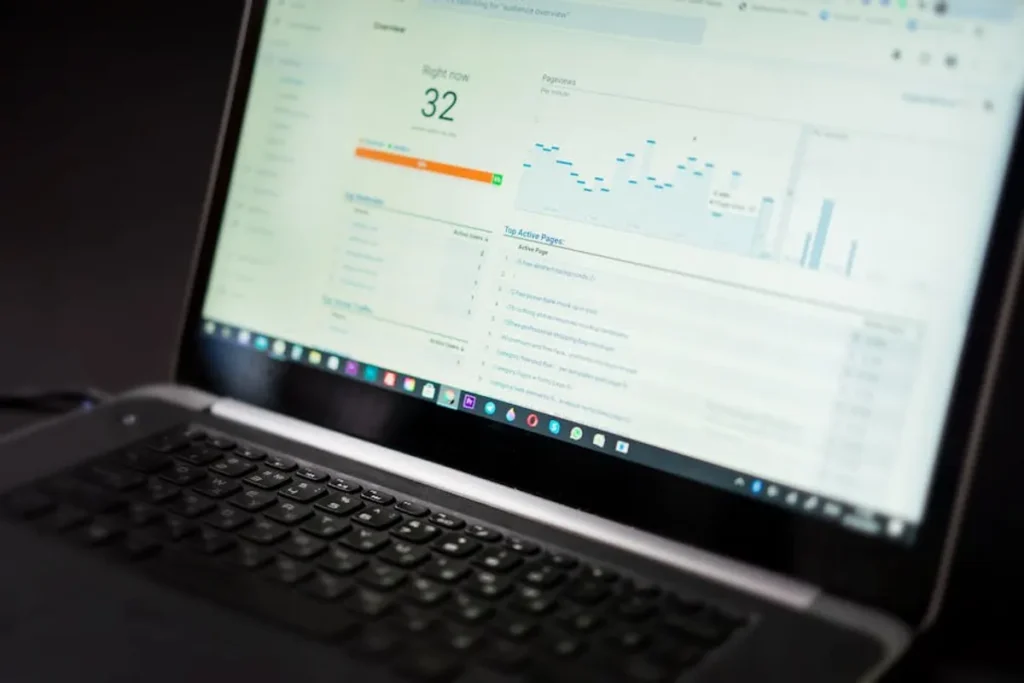
A SERP turbulence checker shows when Google’s search results are unusually unstable for a keyword set, market, device, or country. Instead of only telling you where a page ranks today, it highlights whether the results around that ranking are shifting faster than normal. For SEOs, publishers, agencies, and analysts, that matters because a position drop during a turbulent period often means something different from a steady decline in a calm SERP. SERP Volatility helps separate routine movement from update-driven disruption so teams can decide whether to investigate, wait, escalate, or protect winning pages.
What a SERP turbulence checker does
A turbulence checker measures ranking instability across a tracked SERP set and turns that movement into a practical volatility signal. In operational terms, the tool compares ranking changes over time, detects abnormal swings, and surfaces patterns that suggest algorithmic updates, feature reshuffling, intent shifts, or competitive page replacement.
That makes it useful for more than rank monitoring. It helps answer questions such as:
- Is this ranking loss isolated or part of a broader volatile pattern?
- Are competitors also moving, or only our pages?
- Did turbulence start on a specific date, device, or country?
- Should we diagnose page-level issues now, or wait for the SERP to settle?
Core signals the tool should surface
A practical checker should show daily or near-daily volatility trends, abnormal movement thresholds, keyword cluster instability, and visibility shifts by segment. The most useful views break turbulence down by mobile versus desktop, market, topic group, and page type. If a publisher sees high turbulence only on mobile news-intent terms, that points to a different response than broad volatility across evergreen commercial queries.
When to use a SERP turbulence checker
Use it whenever ranking changes need context. A raw rank report can overstate problems during unstable periods and understate risk during calm periods. Turbulence data helps interpret both.
After sudden ranking drops or gains
If visibility changes sharply in a short window, check whether the surrounding SERP is moving too. A page that falls from position 3 to 8 during broad turbulence may recover without intervention. A page that slips gradually in a stable SERP usually deserves a content, technical, or internal linking review.
During suspected Google updates
When update chatter increases, a turbulence checker helps confirm whether movement is broad, concentrated in certain verticals, or limited to specific query classes. Agencies can use this to avoid premature reporting and to explain to clients why rankings are fluctuating beyond a single site’s control.
Before making reactive changes
One of the most expensive SEO mistakes is changing titles, templates, internal links, or content structure while the SERP is still reshuffling. Turbulence data helps teams avoid over-correcting. If volatility is elevated across the same keyword cluster, waiting 48 to 96 hours can produce a clearer diagnosis.
For competitive monitoring
Not all instability is caused by an update. Sometimes Google rotates page types, rewrites intent interpretation, or introduces new SERP features that displace traditional listings. A turbulence checker reveals whether competitors are replacing each other, whether forums or aggregators are entering the results, and whether a feature-heavy SERP is reducing organic click opportunity.
How to interpret unstable results correctly
The value of a turbulence checker is not the score alone. It is the interpretation layer around the score. High volatility does not automatically mean a penalty, and low volatility does not mean your rankings are safe. The right reading depends on duration, breadth, and concentration.
Short spikes vs sustained turbulence
A one-day spike can reflect temporary testing, data refreshes, or result shuffling. Sustained turbulence across several days is more consistent with a broader update pattern or a meaningful intent recalibration. If movement persists beyond a brief spike, compare affected keywords by topic and landing page type to identify common traits.
Broad-market movement vs niche disruption
If many unrelated keyword groups move at once, the signal points to wider SERP instability. If turbulence appears only in a narrow segment, such as product comparison terms or local-intent queries, your response should focus on that segment’s content format, relevance signals, and SERP feature competition.
Ranking movement with no traffic change
Not every ranking shift is commercially significant. Turbulence can happen in result areas with weak click-through impact, especially when SERP features absorb attention. If rankings moved but clicks and conversions stayed stable, the issue may be visibility noise rather than business risk. This is why turbulence should be reviewed alongside Search Console, analytics, and page-type segmentation.
What to check when volatility is high
When a turbulence checker shows elevated instability, review the affected SERPs in a structured order. Start with the result page itself, then the query class, then your page signals.
SERP-level checks
Look for new result types, forum insertions, video packs, shopping modules, local packs, or heavier brand bias. These changes can alter click distribution even if your nominal position remains similar.
Query-level checks
Group affected terms by intent. If informational queries are now favoring fresh articles, short answers, or community content, your long-form evergreen page may need a different angle rather than a simple refresh.
Page-level checks
Review title alignment, content depth, freshness, internal links, structured data, and competing pages on your own domain. During turbulence, weak pages often become more exposed because Google is testing alternatives more aggressively.
Short workflow example
An agency notices a 14% visibility drop for a retail client over three days. The turbulence checker shows elevated volatility on mobile commercial keywords, while desktop remains relatively stable. Analysts review the affected SERPs and find more shopping-heavy layouts and stronger category-page preference. Instead of rewriting product copy across the site, the team prioritizes category page optimization, improves internal links from buying guides, and delays broader changes until volatility normalizes. This avoids reactive edits and focuses effort where the unstable results indicate the biggest opportunity.
How SERP Volatility makes the data actionable
SERP Volatility is built for teams that need to interpret ranking turbulence, not just record it. The commercial value is in faster triage, better client communication, and fewer unnecessary changes during unstable periods. For publishers, that means understanding whether traffic risk is tied to article freshness, topic clusters, or result-type displacement. For agencies, it means showing clients whether movement is site-specific or market-wide. For in-house SEO teams, it means prioritizing investigations by segment instead of treating every ranking drop as equally urgent.
Practical benefits
- Spot update-like instability early
- Separate isolated losses from market-wide turbulence
- Prioritize fixes by device, country, and keyword cluster
- Reduce costly reactive changes during unstable SERPs
FAQ
Is a SERP turbulence checker the same as a rank tracker?
No. A rank tracker reports positions. A turbulence checker adds context by showing how unstable the surrounding SERP is, which changes how you interpret gains and losses.
How often should I check SERP turbulence?
Daily monitoring is ideal for active SEO programs, especially for publishers, large sites, and agencies managing multiple markets. At minimum, check whenever visibility shifts sharply.
Does high turbulence always mean Google released an update?
No. High turbulence can also come from intent shifts, feature changes, competitor turnover, or temporary result testing. The signal indicates instability, not the cause by itself.
What should I do first when volatility spikes?
Check whether the movement is broad or isolated, segment by device and keyword group, review the live SERPs, and avoid major reactive edits until you know whether the instability is temporary or sustained.