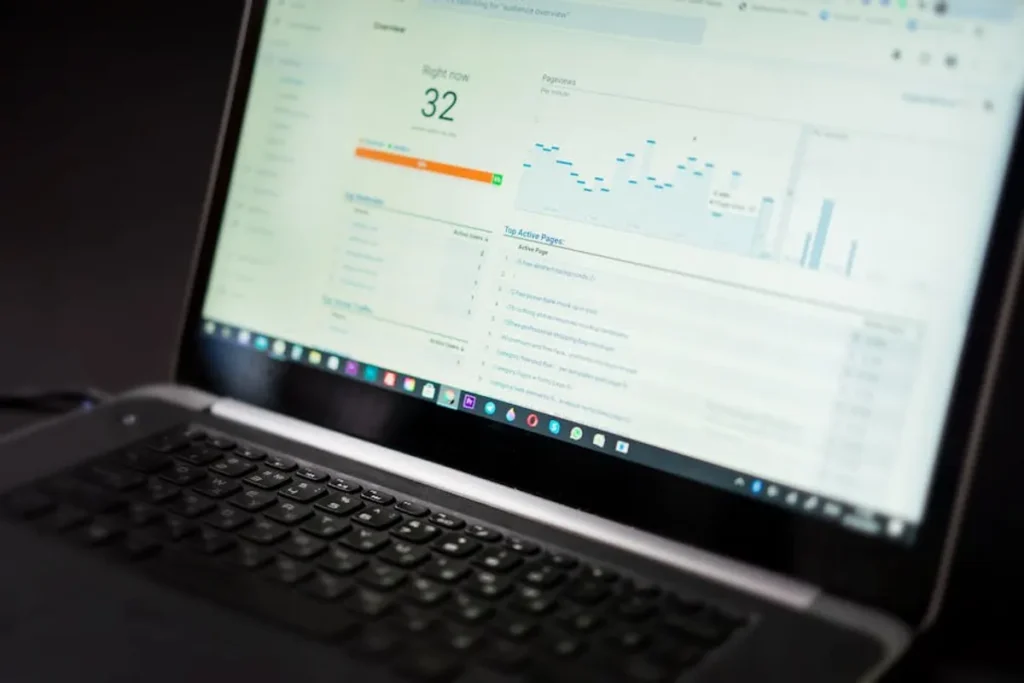
The SERP Volatility Index Tool measures how unstable Google search results are for the keywords, categories, devices, and markets you track. It turns daily ranking movement into a readable volatility signal so SEOs, publishers, agencies, and analysts can quickly tell whether a visibility drop is likely caused by site-specific issues or broader SERP turbulence. Instead of looking at isolated keyword changes, the tool shows whether ranking shifts are normal noise, category-level disruption, or update-like instability that deserves immediate investigation.
What the SERP Volatility Index Tool does
The tool aggregates ranking movement across a tracked keyword set and converts it into an index that reflects the intensity of SERP change over time. A low reading usually means results are relatively stable. A moderate reading suggests elevated movement across positions, features, or domains. A high reading signals widespread reshuffling that may align with algorithm updates, intent reclassification, feature expansion, or aggressive testing in the results.
For practical SEO work, that means you can separate three very different scenarios:
- your site lost positions while the wider SERP stayed calm
- your vertical experienced broad turbulence affecting many domains
- Google is showing update-like behavior across multiple keyword clusters and devices
A useful volatility index does more than report average ranking movement. It helps you compare desktop versus mobile instability, brand versus non-brand behavior, local versus national patterns, and category-specific swings that often get hidden inside account-level averages.
When to use a SERP volatility index
Use the tool whenever rankings move faster than your normal reporting can explain. The strongest use cases are not routine rank checks but moments when context matters most.
After sudden traffic or visibility drops
If organic sessions fall and tracked keywords slide at the same time, the volatility index helps determine whether the problem is likely internal or market-wide. If your pages decline during a calm SERP period, technical, content, internal linking, or intent mismatch issues become more likely. If the market is highly volatile, immediate diagnosis should be more cautious because positions may continue to swing before settling.
During suspected Google updates
When update chatter starts, the index provides a cleaner signal than anecdotal ranking screenshots. A sustained rise in volatility across many keyword groups often appears before teams fully understand which page types or intents are being reweighted. Agencies can use this signal to brief clients early without overcommitting to a cause.
When evaluating category-specific disruption
Not all turbulence is sitewide. Finance, health, ecommerce, news, and local results can move differently on the same day. Segmenting the index by topic cluster or page type helps identify where Google is reordering results most aggressively.
Before making reactive SEO changes
One of the most expensive mistakes in unstable SERPs is changing pages too quickly. If the volatility index shows broad instability, it may be smarter to monitor another cycle before rewriting templates, consolidating pages, or rolling back recent optimizations.
How to interpret volatility signals correctly
A volatility score is only useful if you read it in context. High turbulence does not automatically mean your site was negatively impacted, and low turbulence does not guarantee your rankings are safe.
Look at duration, not just spikes
A one-day spike may reflect temporary testing, news-driven intent changes, or feature reshuffling. Multi-day elevated readings are more meaningful because they suggest persistent reordering rather than short-lived noise.
Compare index movement with your own ranking distribution
If the market is volatile but your top landing pages are flat, your niche may be insulated. If your losses are concentrated on pages sitting near positions 8 to 15, broad turbulence may be amplifying small relevance gaps. The index should be read alongside visibility, average position spread, and page-level winners and losers.
Check devices and SERP features separately
Mobile volatility often diverges from desktop because layout constraints, local intent, and feature density differ. Likewise, image packs, shopping units, local packs, AI-driven elements, and news modules can create ranking instability without a traditional blue-link reshuffle. A strong tool should help isolate these patterns rather than flatten them into one score.
What makes a volatility index commercially useful
For agencies and in-house teams, the value is not the number itself. The value is faster interpretation and better decision-making. A commercially useful tool should help you identify whether movement is isolated, systemic, temporary, or update-like.
Practical benefits
- Reduce false alarms when rankings move during broad SERP turbulence
- Spot update patterns earlier across tracked markets and keyword groups
- Prioritize investigations by category, device, and page type
- Improve client reporting with evidence of market-wide instability
How teams use the tool in a real workflow
A publisher sees a 14% drop in non-brand clicks over three days. The SEO team opens the SERP Volatility Index Tool and finds that news-adjacent informational queries are showing unusually high turbulence on mobile, while evergreen desktop terms remain stable. They segment affected pages by intent, confirm that losses are concentrated on top-of-funnel articles, and delay large-scale content edits. Instead, they monitor another 72 hours, annotate the volatility event in reporting, and focus immediate effort on pages that fell during otherwise stable keyword groups. This prevents unnecessary rewrites and gives stakeholders a clearer explanation of what changed in the market versus on the site.
Signals to watch alongside the index
The index is strongest when paired with supporting diagnostics. Watch whether ranking changes are concentrated in a few positions or spread across the full first page. Review URL replacement patterns to see if Google is swapping page types. Check whether forums, marketplaces, media sites, or aggregators are gaining share. Compare volatility against crawl anomalies, indexing changes, and template deployments so you do not confuse correlation with cause.
It is also worth monitoring whether unstable results coincide with changes in search intent. A keyword can look volatile because Google is rotating between transactional, informational, and mixed-result interpretations. In those cases, the index acts as an early warning that the query deserves closer intent mapping before content changes are made.
Choosing the right scope for tracking
The quality of the volatility signal depends on the keyword set behind it. If the basket is too narrow, the index becomes noisy. If it is too broad, important category shifts get diluted. Most teams benefit from maintaining a market-level index plus separate views for strategic clusters such as commercial terms, editorial terms, local modifiers, and high-value landing pages. This structure makes the tool useful for both executive reporting and tactical SEO diagnosis.
FAQ
What is a normal SERP volatility level?
Normal depends on the niche, device, and keyword mix. The best baseline is your own historical range, not a universal threshold.
Can a volatility index confirm a Google update?
No. It can show update-like instability and timing patterns, but confirmation requires broader evidence and observation over time.
Should I change pages immediately during high volatility?
Usually not. First determine whether the movement is market-wide, isolated to certain query groups, or tied to a known site change.
Is the tool useful for agencies?
Yes. It helps agencies explain ranking turbulence, prioritize client investigations, and avoid overreacting to temporary SERP instability.